SAVE25
Up to 25% off for online bookings — from the 20th to the 5th of each month
Ends 5 Aug →

What Are the Disadvantages of Steam Carpet Cleaning?
Steam carpet cleaning can leave carpets very wet, causing slow drying and other problems. Customers often worry about damp carpets, musty smells, stains returning, or carpet damage. This problem becomes harder when rooms have poor airflow or high indoor moisture.
Customers also need the right cleaning method for their carpet type.
This guide explains the main disadvantages of steam carpet cleaning. Customers will learn how moisture, heat, residue, and poor extraction affect carpets. They will also learn when carpet cleaning service may work better.
What Are the Main Disadvantages of Steam Carpet Cleaning?
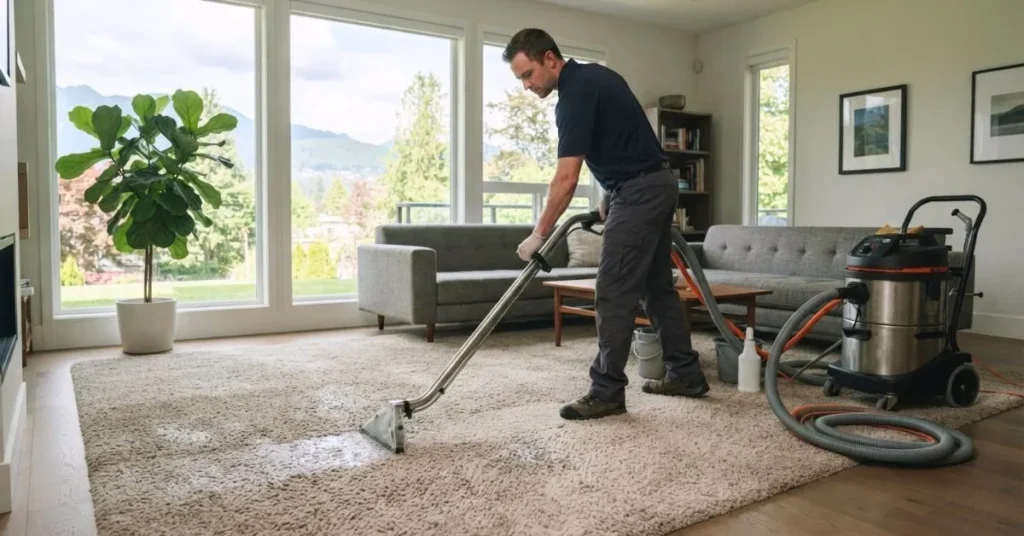
The main disadvantages include long drying times, over wetting, residue, and possible carpet damage. Customers can face several problems after steam cleaning. This problem often starts when too much water enters the carpet. Customers may then wait many hours before using the room again.
This moisture can also affect carpet backing and padding. Customers may notice musty smells when moisture stays trapped below the surface. They may also see stains return after the carpet dries.
Long Carpet Drying Times
Long drying times are one of the biggest disadvantages of steam carpet cleaning. Customers may need to keep carpets unused for several hours. This time can increase when rooms have poor airflow or high humidity. They should improve airflow with fans and open windows when practical.
Customers should also avoid walking heavily on damp carpet. This action can push dirt back into freshly cleaned fibres. The carpet should dry fully before normal use.
Over Wetting and Moisture Retention
Over wetting happens when too much water enters the carpet during cleaning. Customers may notice damp padding after heavy water use. This problem can keep the carpet wet much longer.
They may also notice unpleasant smells as moisture remains trapped underneath.
Customers can reduce this risk by choosing skilled carpet cleaners. The company should use proper water control and strong extraction equipment. This approach helps remove more moisture during the cleaning process.
Risk of Mold and Mildew
Excess moisture can increase the risk of mold and mildew growth. Customers should take trapped moisture seriously. This problem becomes more concerning when carpet padding stays wet for long periods. They should improve airflow and dry the carpet as quickly as possible.
Customers should also watch for musty smells after cleaning. This sign may indicate that moisture has not dried properly. They should contact a professional if dampness continues.
Carpet Shrinkage and Backing Damage
Steam cleaning can damage carpet backing or cause shrinkage when moisture and heat are poorly controlled. Customers with sensitive carpets need extra care. This problem can affect natural fibres and certain carpet constructions. They should identify the carpet material before choosing a cleaning method.
Customers should also avoid excessive heat and water. The company should inspect the carpet before starting the cleaning process. This step helps protect fibres, backing, and carpet shape.
Chemical Residue and Rapid Re Soiling
Chemical residue can make carpet fibres sticky and attract dirt after cleaning. Customers may notice their carpet becomes dirty again quickly. This problem can happen when cleaning products remain inside the fibres. They may also notice a sticky feeling after drying.
Customers can reduce this issue through proper rinsing and extraction. The company should use suitable cleaning products for the carpet. They should also remove excess cleaning solution before finishing.
Wicking and Returning Carpet Stains
Wicking can cause hidden stains to return as the carpet dries. Customers may see an old stain reappear after cleaning. This problem happens when moisture brings hidden soil back toward the surface. They may think the cleaning failed when the stain returns.
Customers should tell the cleaner about deep or old stains. The company can then choose suitable treatment before cleaning. This approach can improve the final appearance of the carpet.
Is Steam Cleaning Suitable for Every Carpet Type?
Steam cleaning is not suitable for every carpet because fibres and backing can react differently. Customers should identify their carpet type before choosing steam cleaning. This step matters for wool, natural fibres, delicate materials, and sensitive backing. They should follow the carpet manufacturer’s cleaning instructions whenever possible.
Customers should also consider the carpet’s age and condition. This information helps the company select safer cleaning methods. They can then reduce the risk of shrinkage, colour changes, or damage.
Carpet Types That May Be More Sensitive
Sensitive carpets may need lower heat, less moisture, or a different cleaning method. Customers with wool or delicate carpets should request an inspection first. This step helps identify possible risks before cleaning begins. They should never assume every carpet needs the same treatment.
Customers should also mention previous cleaning problems. The company can then adjust its cleaning approach when needed. This care helps protect valuable carpets and older flooring.
How Can Steam Cleaning Affect Carpet Fibres and Backing?
Steam cleaning can affect carpet fibres and backing when heat or moisture becomes excessive. Customers may notice changes after improper cleaning. This problem can include shrinking, texture changes, backing damage, or longer drying times. They should choose a cleaning method based on carpet condition.
Customers should also avoid treating every carpet the same way. The company should check fibre type, backing, stains, and moisture risk. This inspection helps protect the carpet during professional cleaning.
Potential Damage From Excessive Heat and Moisture
Excessive heat and moisture can weaken some carpet materials and affect their structure. Customers should be careful with older or delicate carpets. This problem becomes worse when cleaning uses too much water. They should ask about the cleaning process before booking service.
Customers can also ask how the cleaner controls moisture. The company should use suitable heat levels and effective extraction. This method helps limit unnecessary moisture inside the carpet.
Does Equipment and Cleaning Technique Affect the Results?
Equipment quality and cleaning technique strongly affect moisture levels and carpet drying. Customers may get different results from different cleaning systems. This difference often depends on water control, extraction strength, and technician skill. They should ask which equipment the company uses before booking.
Customers should also understand that professional cleaning needs more than strong equipment. The company must choose the right settings for each carpet. This approach helps improve cleaning while reducing moisture problems.
Professional Hot Water Extraction vs DIY Equipment
Professional hot water extraction can provide better moisture control than basic DIY equipment. Customers using rental machines may struggle with water removal. This problem can leave carpets wetter for longer periods. They may also use too much cleaning solution during the process.
Customers can reduce these risks by hiring trained professionals. The company should understand carpet materials and proper extraction methods. This experience can help prevent avoidable cleaning problems.
How Extraction Power Affects Carpet Drying
Strong extraction removes more moisture and can help carpets dry faster. Customers should understand that cleaning adds moisture to carpet fibres. This moisture needs proper removal before drying can finish. They should ask about extraction strength when comparing cleaning services.
Customers should also improve airflow after professional cleaning. The company can recommend suitable drying steps for the room. This combination can help reduce unnecessary drying time.
When Might Low Moisture Carpet Cleaning Be a Better Option?
Low moisture carpet cleaning may suit situations where faster drying matters. Customers may prefer faster drying in busy homes or offices. This option can also help when rooms have limited airflow. They should still choose the method based on carpet type and soil level.
Customers should not choose low moisture cleaning only for speed. The company should inspect the carpet and recommend a suitable method. This approach helps balance cleaning results, carpet safety, and drying needs.
Situations Where Faster Drying Matters
Faster drying matters when customers need to use the room soon after cleaning. Customers with children, pets, offices, or busy homes may need quick access. This need can make moisture levels an important service factor. They should discuss drying expectations before booking professional carpet cleaning.
Customers in Vancouver can also consider indoor airflow and seasonal moisture. The company can recommend cleaning methods based on the property’s conditions. This guidance helps customers choose a practical carpet cleaning solution.
Conclusion
Steam carpet cleaning can have drawbacks when cleaners use too much water or heat. Customers should consider drying time, moisture, residue, carpet type, and extraction strength. They should also watch for returning stains and musty smells.
Professional carpet cleaning can reduce many avoidable cleaning problems. Customers should choose experienced cleaners who inspect carpets before starting. They should also ask about equipment, extraction, cleaning products, and drying methods.
Brighter Cleaning & Maintenance Services helps Vancouver customers care for their carpets properly. We use our 10+ years of experience to guide each cleaning decision. Contact Us today, and we can help you choose the right carpet cleaning service.