SAVE25
Up to 25% off for online bookings — from the 20th to the 5th of each month
Ends 5 Aug →

How to Remove Pet Stains and Odors From Carpet
Pet stains and urine odors can make your carpet smell bad, even after cleaning. The right cleaning steps can help remove stains and reduce lingering smells.
This problem happens when pet waste sinks into carpet fibers or reaches the padding. Surface cleaning may remove the visible stain but leave odor causing residue behind. Brighter Cleaning & Maintenance Services understands the challenges of keeping carpets fresh and clean.
You can solve many fresh pet stains at home with the right method. This guide explains how to clean different pet stains, treat old urine spots, and prevent odors from returning. You will also learn when professional carpet cleaning in Vancouver, BC may help.
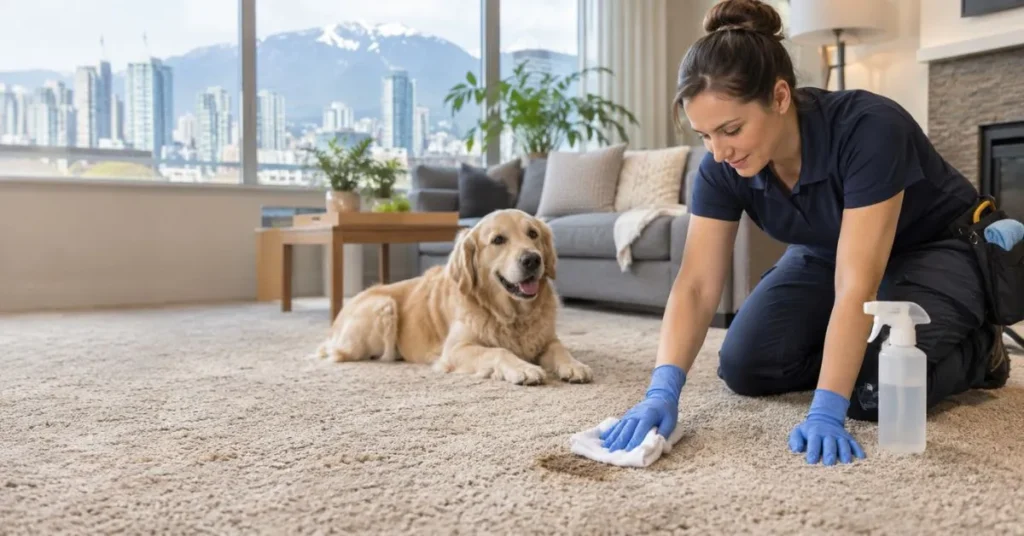
How to Remove Pet Stains and Odors from Carpet Step by Step
You can remove many fresh pet stains by acting quickly and using suitable cleaning products. The key is to absorb the mess before it spreads deeper. Follow these steps to protect your carpet and reduce odors.
Blot Fresh Pet Stains Immediately
Blot fresh pet stains with a clean, white cloth or paper towel. Press gently to absorb as much liquid as possible. Do not rub the stain.
Rubbing pushes pet waste deeper into carpet fibers. It can also spread the stain across a larger area. Keep blotting with a clean section until you remove as much moisture as possible.
Choose the Right Pet Stain Cleaner
Choose a pet stain cleaner that matches the stain and your carpet type. Enzymatic cleaners can break down organic waste that causes odors. Oxygen based cleaners may help lift certain stains.
Read the product label before applying any cleaner. Some products work better on fresh stains, while others target dried residue. Always test the cleaner on a hidden carpet area first.
Apply the Cleaner and Allow It to Work
Apply the cleaner as directed and allow enough contact time. Different products need different amounts of time to work. Follow the label instead of guessing.
This step matters because wiping too soon may reduce cleaning results. Avoid using extra product unless the instructions allow it. Keep pets and children away from the treated area when the label requires it.
Blot or Extract the Remaining Moisture
Remove leftover moisture after the cleaner finishes working. Use a clean, dry towel to blot the treated area. Follow the product instructions for rinsing or extraction.
A wet vacuum or carpet extractor may help remove moisture and loosened residue. Avoid soaking the carpet with extra water. Too much moisture can slow drying and may affect the carpet backing or padding.
Use Baking Soda for Residual Odors After Drying
Baking soda may help absorb some lingering smells after the carpet dries. Sprinkle a light layer over the affected area. Let it sit for several hours, then vacuum thoroughly.
Baking soda does not remove all urine residue or replace an enzymatic cleaner. Do not apply it to a damp carpet. Moisture can make the powder harder to remove completely.
How to Remove Different Types of Pet Stains from Carpet
Different pet stains need different cleaning methods. Urine can leave strong odors, while vomit may contain food particles and colored residue. Identify the mess before choosing your cleaning product.
Always check your carpet care instructions first. Use products that suit the carpet fibers and follow the manufacturer’s guidance. Avoid mixing cleaners, even when one product does not remove the stain.
Remove Pet Urine Stains and Odors
Blot pet urine immediately, then use a suitable enzymatic cleaner. These cleaners help break down organic compounds that contribute to urine odors. Follow the label carefully.
Fresh urine is usually easier to treat than dried urine. Apply enough cleaner to reach the affected area, as directed. Avoid flooding the carpet or padding with liquid.
Let the product work for the recommended time. Remove excess moisture using the method listed on the label. If the smell returns after drying, urine may remain deeper in the carpet.
Remove Pet Vomit and Other Organic Stains
Remove solid pet waste before treating the remaining stain. Use a spoon or blunt tool to lift solids gently. Work from the outside toward the center to limit spreading.
Blot the remaining moisture with a clean cloth. Apply a carpet safe cleaner suitable for the stain and carpet material. Follow the label and avoid harsh scrubbing.
Pet vomit can leave colored marks or unpleasant smells. Some stains may need repeated treatment. Contact a professional if the mark persists or the carpet changes color.
How to Remove Old Pet Stains and Lingering Urine Odors
Old pet stains often need more careful treatment than fresh accidents. Dried urine may leave residue deep inside carpet fibers. Repeated surface cleaning may not reach the full affected area.
Start by locating the stain and checking the carpet material. Use a suitable cleaner according to its instructions. If the odor remains after treatment and drying, consider a professional assessment.
Find Hidden or Dried Pet Urine Spots
Look for discolored areas and spots with a lingering urine smell. Dried urine can become hard to see on some carpets. Check places where pets often rest or have accidents.
A UV urine detection light may help reveal some old spots. However, not every glowing area confirms pet urine. Cleaning products and other materials can also react under UV light.
Mark suspected areas before cleaning. Test any cleaner on a hidden section first. Avoid treating the entire carpet without identifying the affected areas.
Treat Deep Set Stains and Persistent Odors
Treat deep set stains with a cleaner designed for the specific stain. Follow the product instructions and allow the recommended contact time. Older stains may need more than one treatment.
Avoid repeatedly soaking the same area. Excess water can spread residue or reach the padding. If the odor remains after the carpet dries, deeper contamination may be present.
Some old stains also cause permanent discoloration. Cleaning may reduce the mark without restoring the carpet’s original color. A professional can assess the stain and recommend suitable treatment.
Why Pet Urine Odors Return After Cleaning
Pet urine odors often return when residue remains below the carpet surface. A quick wipe may remove the visible liquid but leave waste behind. Changes in moisture can also make lingering smells noticeable again.
Customers often struggle with odors that disappear during cleaning and return later. The solution depends on how far the urine has spread. Understanding the affected carpet layers helps you choose the next step.
How Urine Penetrates Carpet Backing and Underlay
Pet urine can pass through carpet fibers and reach the backing or underlay. The depth depends on the amount of liquid and the carpet’s construction. Large or repeated accidents may affect a wider area.
When urine reaches these layers, surface treatment may not remove all residue. The smell can remain even when the carpet looks clean. A professional inspection can help identify the affected area.
Why Surface Cleaning May Not Remove the Odor Source
Surface cleaning may leave odor causing residue deeper inside the carpet. A household cleaner might remove the visible stain without treating the full affected area. Some products may also mask odors instead of removing their source.
You can reduce this problem by choosing a suitable cleaner and following its directions. Avoid adding more products without checking compatibility. Persistent odors may require professional extraction or deeper treatment.
What to Avoid When Cleaning Pet Stains from Carpet
Avoid cleaning methods that can spread stains or damage carpet fibers. Rubbing, excessive water, and unsuitable chemicals can make the problem worse. Careful treatment helps protect your carpet during stain removal.
Read every product label before use. Check the carpet manufacturer’s care instructions when available. Stop if the carpet changes color or the treatment causes unexpected damage.
Avoid Scrubbing and Overwetting the Carpet
Avoid scrubbing pet stains or pouring too much water onto the carpet. Scrubbing can spread the stain and affect carpet fibers. Excess moisture can also reach the underlay.
Blot gently and use measured amounts of cleaner. Remove excess liquid with clean towels or a suitable extractor. Allow the area to dry fully before checking the results.
Never Mix Cleaning Chemicals
Never mix different cleaning chemicals unless the product labels explicitly allow it. Some combinations can release harmful gases or cause dangerous reactions. Mixing products can also damage carpet materials.
Use one suitable cleaner at a time. Follow its instructions for rinsing or removing residue before considering another product. Keep cleaning products away from children and pets.
Check Carpet Care Instructions Before Applying Cleaners
Check your carpet care instructions before using a stain remover. Different fibers and dyes can react differently to cleaning products. A product suitable for one carpet may damage another.
Test the cleaner on a hidden area first. Let the test area dry before checking for color changes. If you are unsure about the material, ask a carpet cleaning professional for advice.
When to Hire a Professional Carpet Cleaner in Vancouver, BC
Hire a professional carpet cleaner when pet stains or odors persist after careful home treatment. Deep contamination may need specialized equipment and targeted cleaning. Professional advice can also help prevent damage from repeated DIY attempts.
Vancouver homes include apartments, condos, and houses with different carpet types and cleaning needs. Wet weather can also make proper drying important. Choose a service that explains its treatment process and realistic results.
When Pet Urine Has Reached the Carpet Underlay
Consider professional treatment when urine appears to have reached the carpet underlay. Signs may include a strong odor that returns after cleaning. Large or repeated accidents may also affect deeper layers.
Surface products may not reach all contaminated areas. A professional can inspect the carpet and determine whether deeper treatment is appropriate. In severe cases, the underlay may need replacement.
What Professional Pet Stain and Odor Treatment Involves
Professional treatment usually begins with an inspection of the affected carpet. The cleaner checks the stain, carpet material, and odor severity. This helps determine which method suits the problem.
Depending on the carpet and contamination, treatment may include targeted stain removal, enzymatic products, or hot water extraction. Not every carpet needs the same process. A reliable provider should explain the proposed method before starting.
When Stains or Odors Persist After DIY Cleaning
Contact a professional when stains or odors remain after suitable DIY treatment. Repeated cleaning may not solve contamination beneath the surface. It may also increase the risk of overwetting.
Ask about the inspection process, cleaning method, and expected results. Share which products you have already used. This information helps the cleaner choose a suitable next step.
Keep Your Vancouver Carpets Cleaner and Fresher
Quick action, suitable products, and careful drying can help reduce pet stains and odors. Blot fresh accidents instead of rubbing them. Treat old stains carefully, and avoid soaking the carpet.
Some problems need more than home cleaning. Urine that reaches the underlay can leave odors behind even after surface treatment. Professional assessment can help identify the cause and guide the next step.
Brighter Cleaning & Maintenance Services helps Vancouver customers care for their carpets and address difficult cleaning problems. We can assess your carpet’s condition and discuss suitable cleaning options. Contact us today to learn how we can help your carpets look cleaner and smell fresher.