SAVE25
Up to 25% off for online bookings — from the 20th to the 5th of each month
Ends 5 Aug →

How to Prevent Mold and Mildew Under Carpet
Mold and mildew under your carpet can grow when trapped moisture stays too long. This can damage carpet padding, create musty smells, and harm your indoor air quality.
Vancouver’s rainy weather can make damp carpets harder to dry. Water from wet shoes, spills, or leaks can seep into carpet padding and the subfloor. Brighter Cleaning & Maintenance Services understands the importance of keeping carpets clean and dry.
You can prevent many mold problems with simple steps. This guide explains how to control moisture, spot warning signs, and dry wet carpets. You will also learn when professional carpet cleaning services in Vancouver, BC can help keep your carpets clean and fresh.
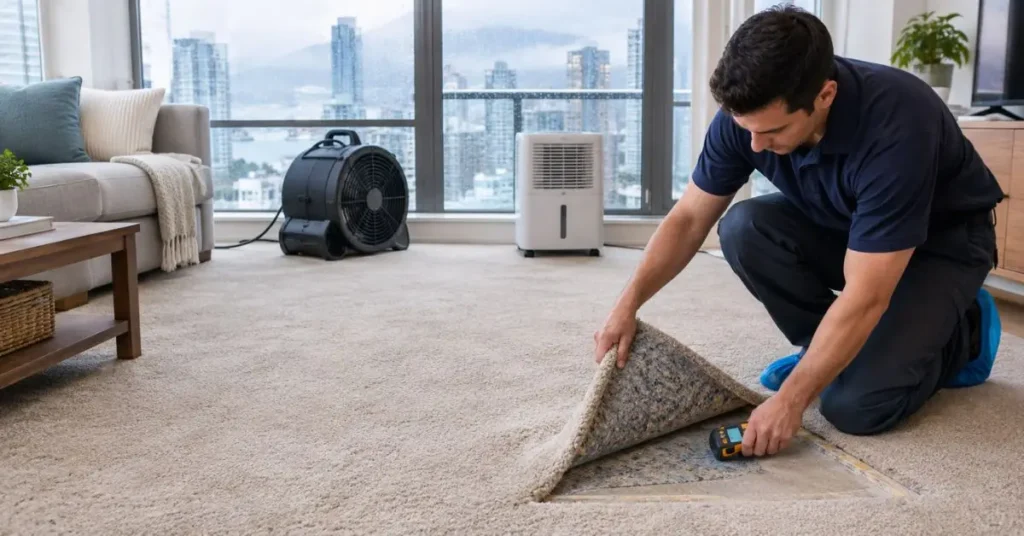
How Mold and Mildew Grow Under Carpet
Mold and mildew grow under carpet when moisture stays trapped in dark, damp areas. They can spread when moisture combines with dust and other organic materials. Quick action helps reduce the risk.
Why Carpet Padding and Subfloors Trap Moisture
Carpet padding can hold water beneath the carpet fibers. The carpet surface may feel dry while the padding remains wet. This hidden moisture can damage flooring over time.
Wood and concrete subfloors can also stay damp after leaks or flooding. You should check beneath the carpet after serious water damage. Drying only the surface may not solve the problem.
Common Sources of Moisture Under Carpet in Vancouver Homes
Rain, plumbing leaks, spills, and damp entryways can introduce moisture beneath carpet. Vancouver’s wet weather makes these risks worth watching. Wet shoes can carry water indoors every day.
Basements and rooms near leaking windows may also collect moisture. Customers can reduce these risks by finding water sources early. Check damp areas after heavy rain or plumbing problems.
How to Identify Mold Under Carpet
Musty odors, visible growth, and damp padding can signal possible mold under carpet. However, some signs may come from other moisture problems. Check suspicious areas carefully.
Signs of Hidden Mold and Moisture Damage
Look for musty smells, unexplained dampness, stains, and changes in carpet condition. You may also notice loose edges or damaged flooring. These signs do not always confirm mold.
Check areas near windows, exterior doors, and plumbing fixtures. Do not pull up large carpet sections without considering the damage. A qualified professional can help assess serious moisture problems.
What a Musty Carpet Smell May Indicate
A musty carpet smell may indicate trapped moisture or possible mold growth. Air fresheners will not fix the source. You need to find where the smell begins.
Check for spills, leaks, and damp padding nearby. If the smell continues, arrange a proper inspection. Professional carpet cleaners can help remove ordinary soil and odors, but hidden mold needs a separate assessment.
How to Prevent Mold and Mildew Under Carpet
You can prevent mold under carpet by controlling moisture and drying wet areas quickly. Keep carpets clean, fix leaks, and improve airflow. Small actions can help protect your floors.
Control Indoor Humidity and Improve Airflow
Keep indoor humidity below 60%, ideally between 30% and 50%. A simple humidity meter helps you track indoor moisture. Use a dehumidifier when humidity stays high.
Run fans to move air through damp rooms. Open windows when outdoor conditions are suitable. Good airflow helps carpets dry faster after spills and cleaning.
Inspect for Leaks, Condensation, and Water Damage
Check for leaks and condensation before they cause lasting moisture problems. Look around windows, pipes, appliances, and exterior doors. Fix leaks as soon as possible.
After heavy rain, check rooms with past water problems. Early repairs can prevent moisture from reaching carpet padding. Call a qualified repair professional when you cannot find the leak.
Choose Suitable Carpet and Moisture Resistant Padding
Choose carpet and padding suited to your room’s moisture conditions. Some products resist moisture better than standard padding. However, no padding can prevent mold if water remains trapped underneath.
Ask a flooring professional about suitable materials for your home. Always follow the manufacturer’s care and installation instructions. Proper material choices can help reduce future moisture problems.
Avoid Carpet in Persistently Damp Areas
Avoid wall to wall carpet in areas that remain damp. Bathrooms, laundry rooms, and some basements may need different flooring. Moisture resistant hard flooring can be easier to maintain.
If you already have basement carpet, check it regularly. Address dampness before installing new flooring. A dry subfloor is essential for a sound installation.
Keep Carpets Clean and Dry With Regular Maintenance
Regular vacuuming removes dust and dirt that collect in carpet fibers. Clean spills quickly before liquids reach the padding. Keep entry mats clean and dry during Vancouver’s rainy months.
Avoid soaking carpets during home cleaning. Too much cleaning water can create another moisture problem. Always ensure the carpet dries fully after washing.
Schedule Professional Carpet Cleaning and Ensure Thorough Drying
Professional carpet cleaning removes embedded dirt and helps maintain carpet condition. Trained cleaners use suitable methods for different carpet types. Proper water extraction and drying are essential.
Brighter Cleaning & Maintenance Services provides cleaning services for homes and businesses. Our team understands the importance of careful carpet care. Ask about the right cleaning method for your carpet.
Routine carpet cleaning is not a mold remediation service. Tell your provider about musty odors, leaks, or suspected mold before booking. Established mold may require a qualified remediation specialist.
How to Dry Wet Carpet and Prevent Mold Growth
Dry wet carpet quickly to reduce the chance of mold growth. The carpet surface, padding, and subfloor may all need attention. Do not assume the floor is dry because the top feels dry.
Stop the Water Source and Remove Standing Water
Stop the leak or water source before drying the carpet. If water comes from plumbing, arrange repairs promptly. Avoid electrical equipment in wet areas until it is safe.
Remove standing water with suitable water extraction equipment. Never use a regular household vacuum to collect standing water. Contact a water damage professional if flooding is extensive or the water may be contaminated.
Extract Water and Dry Carpet Within 24 to 48 Hours
Start drying wet carpet immediately, ideally within 24 to 48 hours. Mold can begin growing during this period when conditions allow. Faster drying reduces the risk but does not guarantee prevention.
Use suitable extraction equipment to remove excess water. Increase airflow and lower indoor humidity. Get professional help when the carpet remains wet or the water damage is extensive.
Lift Saturated Carpet to Dry the Padding and Subfloor
Heavily soaked carpet may need lifting to dry the padding and subfloor. Water can remain trapped even after surface drying. A trained professional can assess the affected layers.
Do not reinstall carpet over damp flooring. Check that all affected materials have dried fully. Replace padding that cannot be cleaned or dried safely.
Use Fans and Dehumidifiers to Improve Drying
Fans and dehumidifiers help remove moisture from damp rooms. Place equipment where it can move air safely. Keep the room closed when outdoor humidity would make drying harder.
Check the carpet and surrounding floor regularly. Do not rely on fans alone after major flooding. Hidden moisture may need professional tools to detect.
Know When Wet Carpet and Padding Need Replacement
Replace carpet or padding when safe drying and cleaning cannot restore it. Long periods of dampness can damage materials. Moldy padding may need removal rather than surface cleaning.
The decision depends on the water source, damage, and affected materials. Get a professional assessment if mold is visible or the damage is extensive. Do not reinstall materials until the underlying floor is dry.
When to Seek Professional Help for Carpet Mold
Seek professional help when mold is suspected, moisture persists, or water damage is extensive. The right service depends on the problem. Routine carpet cleaning and mold remediation have different purposes.
When Routine Carpet Cleaning Is Not Enough
Routine carpet cleaning may not resolve mold growing beneath carpet or inside padding. Surface cleaning cannot confirm that hidden materials are safe. Persistent odors or dampness need further assessment.
Tell your cleaner about past leaks and flooding. Ask whether the problem requires a specialist before booking. This helps you choose the right service from the start.
When to Contact a Mold Remediation or Water Damage Specialist
Contact a qualified specialist for extensive mold, contaminated water, or ongoing moisture damage. Avoid disturbing large areas of suspected mold. Follow professional advice about safe removal and repairs.
People with asthma, allergies, or other health concerns should take extra care. Seek medical advice if you have health symptoms that concern you. A cleaning service should not promise to diagnose or treat health problems.
What to Check Before Reinstalling Carpet After Water Damage
Confirm that the carpet, padding, and subfloor are fully dry before reinstalling. Check for remaining dampness and signs of damage. Resolve the original leak or moisture source first.
Replace materials that cannot be restored safely. Follow the recommendations of the restoration or flooring professional. Proper preparation helps reduce the risk of recurring moisture problems.
Conclusion
Preventing mold under carpet starts with moisture control, quick drying, and regular care. Check for leaks and watch for musty smells. Dry spills quickly and keep indoor humidity under control.
Brighter Cleaning & Maintenance Services helps Vancouver homes and businesses maintain cleaner carpets. With more than 10 years of experience, our team understands the value of proper carpet care. We also recognize when suspected mold needs specialist attention.
Do not let damp carpet become a bigger problem. Contact Brighter Cleaning & Maintenance Services today to discuss your carpet cleaning needs. We will help you choose the right cleaning service for your Vancouver property.