SAVE25
Up to 25% off for online bookings — from the 20th to the 5th of each month
Ends 5 Aug →

How to Dry Wet Carpet Fast After a Spill
Wet carpet after a spill? Act fast to remove water and prevent musty odors. The longer moisture stays trapped, the harder your carpet becomes to dry.
This problem happens when spills soak through carpet fibers into the padding. Fans alone may not remove that hidden moisture. You need the right steps to dry your carpet safely and quickly.
In this guide, you’ll learn how to dry wet carpet, reduce moisture, and spot hidden dampness. You’ll also discover when Vancouver carpet cleaning services can help protect your home and when to seek professional mold remediation.
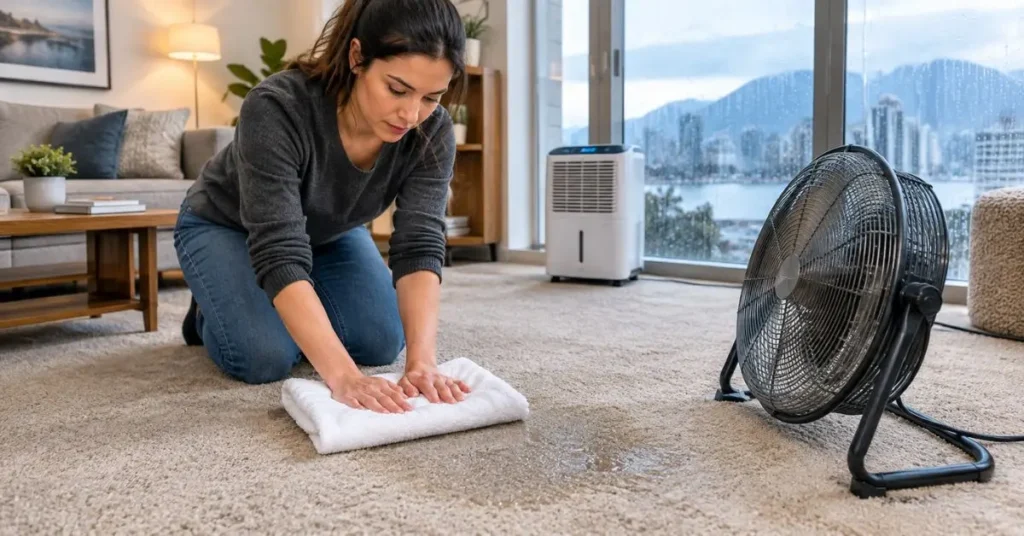
How to Speed Up Carpet Drying After a Spill
You can dry wet carpet faster by removing water first, then improving airflow. Start as soon as the spill happens. Quick action helps limit damage and reduces the risk of lingering odors.
Stop the Water Source and Check for Safety Hazards
Stop the water source before you begin drying the carpet. Turn off leaking taps or appliances when safe. Keep away from wet electrical outlets, cords, and appliances. If water reaches electrical equipment, avoid the area and contact a qualified professional.
Remove Standing Water and Blot Excess Moisture
Remove standing water and blot the carpet with clean, dry towels. Use white towels to reduce the risk of color transfer. Press firmly on the wet area. Replace soaked towels and repeat until they absorb less water.
Do not rub the carpet. Rubbing can spread stains and damage carpet fibers.
Extract Water with a Wet Dry Vacuum
A wet dry vacuum removes water trapped deep inside carpet fibers. Use a machine designed to collect liquids. Follow its instructions and make several slow passes over the wet area.
Never use a standard household vacuum on wet carpet. Water can damage the machine and create an electrical hazard.
How to Dry Wet Carpet Without a Wet Dry Vacuum
You can dry wet carpet without a wet dry vacuum by using towels, fans, and a dehumidifier. Press clean towels into the carpet to absorb moisture. Keep replacing them until they stay relatively dry.
Then, run fans across the carpet and use a dehumidifier if available. These steps help remove moisture from the fibers and indoor air.
Check the Carpet Padding and Subfloor
Check the carpet padding and subfloor if the spill has soaked through the carpet. The surface may feel dry while moisture remains underneath. This hidden water can cause lasting odors and damage.
If safe, gently lift a carpet edge to inspect below. Stop if you find extensive water, damaged flooring, or contaminated liquid. A restoration professional can assess deeper moisture.
Use Fans and Air Movers to Improve Airflow
Fans and air movers help wet carpet dry by moving air across its surface. Place them near the wet area. Aim airflow across the carpet rather than straight down.
Keep air moving steadily. For large spills, professional air movers may help speed up drying.
Run a Dehumidifier to Reduce Indoor Humidity
A dehumidifier pulls moisture from indoor air and helps wet carpet dry faster. Close the room’s doors and windows when practical. Follow the unit’s safety and operating instructions.
Empty the water tank as needed. In damp Vancouver weather, a dehumidifier can help when outdoor air feels humid.
Know When to Open Windows
Open windows only when outdoor air is drier than indoor air. Fresh air may help in suitable conditions. However, rainy or humid weather can slow drying.
Check the weather before opening windows. Keep them closed if damp air enters the room.
Avoid Unsafe Carpet Drying Methods
Avoid heat guns and direct high heat when drying wet carpet. Excessive heat can damage carpet fibers and backing. It may also create a fire risk.
Do not use a hair dryer near standing water. Choose steady airflow and moisture removal instead.
How Long Does Wet Carpet Take to Dry?
Wet carpet may take several hours to dry, but heavily soaked carpet can take much longer. Drying time depends on how much water entered the carpet. Airflow, room temperature, and indoor humidity also affect the result.
Factors That Affect Carpet Drying Time
Water depth, carpet thickness, and room humidity affect drying time. A small spill may dry faster than a soaked carpet. Thick carpet and wet padding often need more time.
Fans and dehumidifiers can help speed up drying. However, you should check the padding and subfloor before assuming the job is complete.
Why Immediate Drying Matters
Immediate drying helps limit moisture damage and reduce the risk of mold growth. Do not wait for the carpet to dry on its own. Remove water and start airflow as soon as it is safe.
Mold can develop when damp materials remain wet. There is no guaranteed safe waiting period, so act quickly and seek help when water has soaked deeply.
How to Prevent Mold and Musty Odors in Wet Carpet
Remove moisture quickly to help prevent mold and musty odors in wet carpet. Lingering dampness can affect carpet, padding, and nearby materials. Drying the surface alone may not solve the problem.
Keep fans and a dehumidifier running as needed. If a musty smell remains after drying, check for hidden moisture instead of masking the odor.
Recognize Signs of Trapped Moisture
A musty smell, damp padding, or a persistently wet area may signal trapped moisture. Carpet that feels cool or damp also needs further checking. These signs do not confirm mold, but they deserve attention.
If the odor returns or the carpet stays damp, contact a qualified professional. They can check hidden areas and recommend suitable next steps.
Understand How the Water Source Affects Cleanup
The type of water determines how safely you can clean wet carpet. A small spill of clean drinking water may need simple extraction and drying. Sewage, floodwater, and contaminated appliance leaks pose different risks.
Avoid handling contaminated water yourself. Keep people and pets away, and contact a water damage restoration specialist. They can assess affected materials and safe cleanup options.
How to Tell If Carpet Is Completely Dry
Carpet is completely dry only when its fibers and affected layers no longer retain excess moisture. A dry surface does not prove that the padding or subfloor is dry. Check carefully before moving furniture back.
Check the Carpet Fibers, Padding, and Subfloor
Check the carpet surface and underlying layers for signs of moisture. Press a clean, dry towel onto the carpet. If it picks up moisture, continue drying.
Pay attention to areas near walls and furniture. If the carpet was heavily soaked, a professional assessment may be more reliable than touch alone.
Know When Professional Moisture Testing Is Needed
Professional moisture testing helps identify water hidden beneath carpet and flooring. Consider it after major spills, leaks, or flooding. It is especially useful when the surface feels dry but odors or dampness remain.
A trained technician can check affected materials with suitable tools. This helps guide drying and repair decisions.
Can Wet Carpet and Padding Be Saved?
Wet carpet and padding can sometimes be saved if you act quickly and assess the damage. The outcome depends on the water source, how deeply it soaked, and how long materials stayed wet.
When Carpet Padding Can Be Dried and Reused
Carpet padding may be reusable after a small, clean water spill if it dries fully. The right choice depends on the padding’s condition. A professional can assess whether it remains safe and usable.
Signs That Carpet or Padding Needs Replacement
Replace damaged padding when it cannot be cleaned or dried properly. Contaminated water, lingering odors, and lasting damage may require removal. A professional should assess heavily soaked materials before reuse.
When to Call a Professional for Wet Carpet
Call a professional when water has soaked deeply into the carpet or the damage seems extensive. Quick action matters, but some problems need more than household equipment. Choose the right service for the type of damage.
When to Contact a Water Damage Restoration Specialist
Contact a water damage restoration specialist after flooding, sewage exposure, or major leaks. These situations may affect flooring and other building materials. A restoration team can assess the damage and arrange suitable drying and cleanup.
When Professional Carpet Cleaning Can Help
Professional carpet cleaning can help remove suitable spill residue, dirt, and lingering odors. It may be useful after you have addressed the moisture problem. Cleaning alone does not fix hidden water damage or contaminated materials.
For homeowners seeking carpet cleaning in Vancouver BC, choose a provider whose services match your needs. Ask about the cleaning method and whether the carpet must dry before treatment.
What to Expect from Professional Water Extraction and Drying
Professional water extraction removes excess moisture using equipment suited to the damage. Technicians may use powerful extractors, air movers, and dehumidifiers. They can also check affected areas for hidden moisture.
The right process depends on the water source and damage level. Ask the provider what their service includes before booking.
How to Clean Carpet After a Spill Has Dried
Clean the carpet after drying to remove any residue left by the spill. Drying removes moisture, but it may not remove dirt or stains. Use a cleaning method suited to your carpet type.
Remove Remaining Spill Residue and Odors
Remove leftover residue with a carpet safe cleaner that suits the spill. Test the product on a hidden spot first. Follow the label and avoid soaking the carpet again.
Blot the area rather than scrubbing it. If the stain or odor remains, consider professional carpet cleaning.
When to Arrange Professional Carpet Cleaning in Vancouver
Arrange professional carpet cleaning in Vancouver when stains, residue, or odors remain after drying. A trained cleaner can assess the carpet and recommend a suitable method. Choose a service that fits the carpet’s condition and cleaning needs.
Conclusion
Wet carpet needs quick action. Remove standing water, blot the fibers, and improve airflow with fans and a dehumidifier. Check the padding and subfloor, too. These steps help reduce lingering moisture and odors.
Do not ignore a musty smell or carpet that stays damp. Brighter Cleaning & Maintenance Services can help with suitable carpet cleaning needs in Vancouver. Major flooding or contaminated water may require a water damage restoration specialist instead.
Protect your carpet with the right care. Contact Brighter Cleaning & Maintenance Services today, and we’ll help you choose the right carpet cleaning solution for your home. We can discuss your concerns and recommend the next step based on your carpet’s condition.