SAVE25
Up to 25% off for online bookings — from the 20th to the 5th of each month
Ends 5 Aug →

How Over Wetting Can Damage Your Carpet
Over wetting can damage your carpet, soak its padding, and leave stubborn odors behind. A carpet may look clean but hide moisture underneath. Too much water can also cause stains to return after cleaning.
This problem happens when carpet cleaning machines leave too much water behind. Poor extraction can allow moisture to reach the carpet backing, padding, and subfloor. Damp conditions can also encourage mold growth if the carpet stays wet.
You can solve this by removing excess water and improving airflow quickly. In this guide, we explain the causes, warning signs, damage, and drying methods. You will also learn when professional carpet cleaning in Vancouver, BC can help protect your carpet.
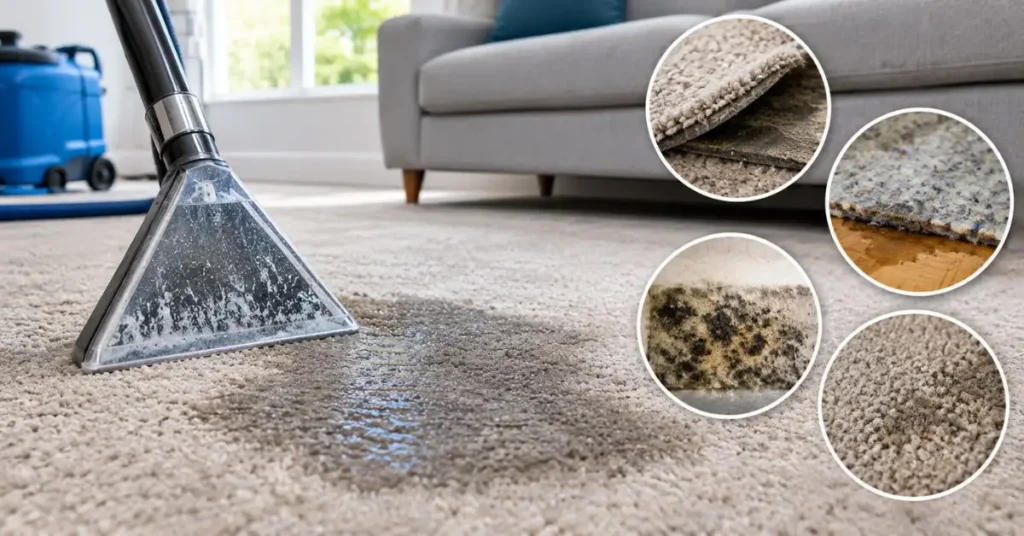
What Causes Carpet Over Wetting During Cleaning?
Carpet over wetting happens when cleaning adds more water than the machine can remove. This often occurs during DIY cleaning or when equipment extracts water poorly. Using too much cleaning solution can also leave unwanted moisture behind.
Using Too Much Water or Cleaning Solution
Using too much water can soak your carpet and its padding. Customers often apply extra solution when stains seem difficult to remove. However, more water does not always mean better cleaning.
Excess moisture can push dirt deeper into the carpet. Too much detergent may also leave sticky residue behind. Follow the product directions and avoid soaking one area repeatedly.
Why Rental Carpet Cleaning Machines Leave Excess Moisture
Rental carpet cleaning machines can leave carpets too wet when extraction is weak. Some machines spray water faster than they remove it. Moving too quickly can also reduce the amount of water recovered.
You can solve this by following the machine instructions carefully. Move slowly and make extra passes without spraying water. Check the carpet as you work, especially in thicker areas.
How to Tell If Your Carpet Is Too Wet
Your carpet may be too wet if it feels soaked, stays damp, or develops a musty smell. Surface moisture alone does not always show how wet the padding is. Check for warning signs before the problem gets worse.
The Difference Between Damp and Soaked Carpet
A damp carpet feels slightly moist, while a soaked carpet holds much more water. A lightly damp carpet may dry with good airflow. A soaked carpet may need stronger extraction and careful moisture checks.
Do not judge moisture by touch alone. Thick carpet can hide water underneath. If water comes up when you press the carpet, remove more moisture.
Signs of Moisture Beneath the Carpet
A lingering damp smell or soft, wet padding may signal trapped moisture. You might notice dark patches, returning stains, or damp edges. These signs can mean water has moved below the carpet surface.
Check nearby baseboards and exposed carpet edges when safe. Avoid lifting glued carpet or forcing heavy furniture aside. Contact a professional if the padding or subfloor remains wet.
What Damage Can Over Wetting Cause to Your Carpet?
Over wetting can damage carpet backing, soak the padding, and cause stains or odors. The level of damage depends on the carpet materials and how long moisture remains. Quick action can help reduce further problems.
Carpet Delamination and Backing Damage
Excess moisture can weaken the adhesive that holds carpet backing together. This damage is called carpet delamination. The carpet may ripple, bubble, or separate between its backing layers.
Not every wet carpet develops delamination. However, repeated soaking can raise the risk. Stop cleaning if the carpet begins lifting or changing shape.
Carpet Padding and Subfloor Damage
Excess water can pass through carpet backing and soak the padding underneath. Padding can hold moisture that ordinary surface cleaning cannot remove. The subfloor may also suffer damage if water remains trapped.
Wood subfloors may swell or warp when exposed to moisture. Other materials can also develop problems when dampness persists. A professional assessment can help identify hidden moisture.
Mold, Mildew, and Persistent Musty Odors
Wet carpet and padding can support mold growth when moisture remains for too long. Mold may develop in hidden areas that receive little airflow. A musty odor can signal a moisture problem that needs attention.
Aim to dry wet carpet and padding within 24 to 48 hours, where possible. This is a useful warning window, not a guarantee against mold. Contact a qualified restoration professional if dampness persists or mold appears.
Carpet Wicking and Returning Stains
Carpet wicking happens when deep moisture carries dissolved dirt back toward the surface. A stain may disappear during cleaning but return as the carpet dries. This can happen when moisture remains deep in the carpet fibers.
Avoid repeatedly soaking the same spot to remove the stain. Blot fresh spills and use suitable cleaning products. Professional extraction may help remove deep soil and reduce recurring stains.
How Long Does Carpet Take to Dry After Cleaning?
Carpet drying time depends on moisture levels, carpet thickness, airflow, and room humidity. Many carpets dry within several hours after effective professional cleaning. Heavily soaked carpet and padding can take much longer.
Factors That Affect Carpet Drying Time
Airflow, humidity, carpet thickness, and water extraction all affect drying time. Thick carpet and dense padding can hold more moisture. Poor ventilation can also slow evaporation.
Vancouver’s rainy weather may increase indoor humidity when ventilation is limited. Use a dehumidifier when indoor air feels damp. Follow the cleaning provider’s drying instructions for your carpet.
When Prolonged Dampness Becomes a Concern
Carpet that stays wet for 24 to 48 hours needs prompt attention. Persistent moisture increases the risk of odors and microbial growth. Saturated padding may need specialized drying or replacement.
Do not wait for a musty smell to appear. Check damp areas regularly and keep air moving. Seek professional help if the carpet remains wet despite your efforts.
How to Dry an Over Wet Carpet
You can dry an over wet carpet by extracting excess water and improving airflow. Acting quickly helps limit moisture reaching the padding and subfloor. Extensive soaking may require professional drying equipment.
Extract Excess Water Immediately
Remove as much excess water as possible using suitable extraction equipment. A wet and dry vacuum can help with clean water spills when used according to its instructions. Never use an ordinary household vacuum to collect water.
Blot small spills with clean, absorbent towels. Press gently instead of rubbing the carpet fibers. For widespread soaking, contact a qualified water damage restoration provider.
Improve Airflow and Use a Dehumidifier
Fans and dehumidifiers can help carpet release moisture faster. Place fans where they move air across the damp area. Use a dehumidifier to reduce indoor humidity.
Keep the room ventilated when outdoor conditions allow. Avoid directing damp air into other rooms. Continue drying until the carpet and underlying materials are properly dry.
When Hidden Moisture Requires Professional Assessment
Professional assessment helps when moisture remains trapped beneath the carpet. Surface drying may not remove water from dense padding or the subfloor. Specialized equipment can help locate and remove hidden moisture.
Do not pull up glued carpet without proper guidance. You could damage the carpet or its backing. Ask a qualified professional to assess persistent wetness.
How to Prevent Over Wetting During Carpet Cleaning
You can prevent over wetting by controlling water use and removing moisture thoroughly. Careful preparation helps machines clean more effectively. Simple changes can also reduce drying time and damage risks.
Vacuum and Pre Treat the Carpet Before Cleaning
Vacuuming first removes loose dirt before wet cleaning begins. Dry soil can turn into muddy residue when mixed with water. Pre treating suitable stains can also reduce repeated wet passes.
Choose a cleaner that suits your carpet fibers. Test it on a hidden spot first. Follow the product instructions and avoid using too much solution.
Limit Wet Passes and Use Extra Dry Passes
Limiting wet passes helps prevent excessive moisture from entering the carpet. Repeated spraying can soak the backing and padding. Extra dry passes help remove more water without adding more solution.
Move the machine slowly and evenly. Follow the manufacturer’s instructions for each pass. Stop if the carpet becomes heavily saturated.
Follow Equipment Instructions and Check Water Recovery
Correct machine use helps balance cleaning performance and water removal. Check the recovery tank as you clean. If little water returns, review the machine setup and instructions.
Do not assume the carpet is dry because the surface feels clean. Check for damp areas and allow enough drying time. Stop and seek advice if moisture remains excessive.
When to Contact a Professional Carpet Cleaning or Restoration Service in Vancouver
Contact a professional when your carpet stays soaked, develops persistent odors, or has hidden moisture. A carpet cleaning company can help with suitable cleaning and extraction needs. Flooding or contaminated water may require a specialist restoration service instead.
When Carpet Padding or the Subfloor Remains Wet
Wet padding or subfloor materials may need professional moisture checks and drying. Surface fans may not reach water trapped underneath. Delaying action can increase the chance of lasting damage.
Contact a qualified provider if dampness continues or the carpet changes shape. Explain how the carpet became wet and how long it has stayed damp. This information helps the provider choose the right next steps.
When Floodwater or Contaminated Water Affects the Carpet
Floodwater and contaminated water can introduce harmful substances into carpet and padding. Do not treat these situations like ordinary cleaning spills. Avoid direct contact and keep children and pets away from affected areas.
Contact a qualified water damage restoration provider for guidance. Some carpet and padding may require removal, depending on contamination and damage. Follow professional advice before attempting further cleaning.
Conclusion
Over wetting can damage carpet backing, soak padding, and cause stains to return. Quick water removal and good airflow can help limit further problems. Persistent dampness needs prompt attention.
Brighter Cleaning & Maintenance Services helps Vancouver customers care for their carpets. Our team focuses on suitable cleaning methods and careful moisture removal. We can also help you understand when a moisture problem needs specialist attention.
Do not let excess moisture threaten your carpet. Contact Brighter Cleaning & Maintenance Services today, and we will help you choose the right carpet care solution for your Vancouver home or business.