SAVE25
Up to 25% off for online bookings — from the 20th to the 5th of each month
Ends 5 Aug →

How Often Should Your Vancouver Business Schedule Janitorial Services?
Your business may need janitorial services daily, several times weekly, or once a week. Dirty floors, messy washrooms, and overflowing bins can affect your workplace. Customers and employees notice these problems quickly.
This problem happens when businesses follow the wrong cleaning schedule. Some workplaces need daily care, while others need fewer visits. With 10+ years of janitorial cleaning experience, we understand these different needs. The right plan keeps your workplace clean without unnecessary costs.
You can solve this by choosing a schedule that fits your workplace. This guide explains janitorial cleaning frequency, workplace needs, and Vancouver weather conditions. You will also learn when to increase your cleaning visits.
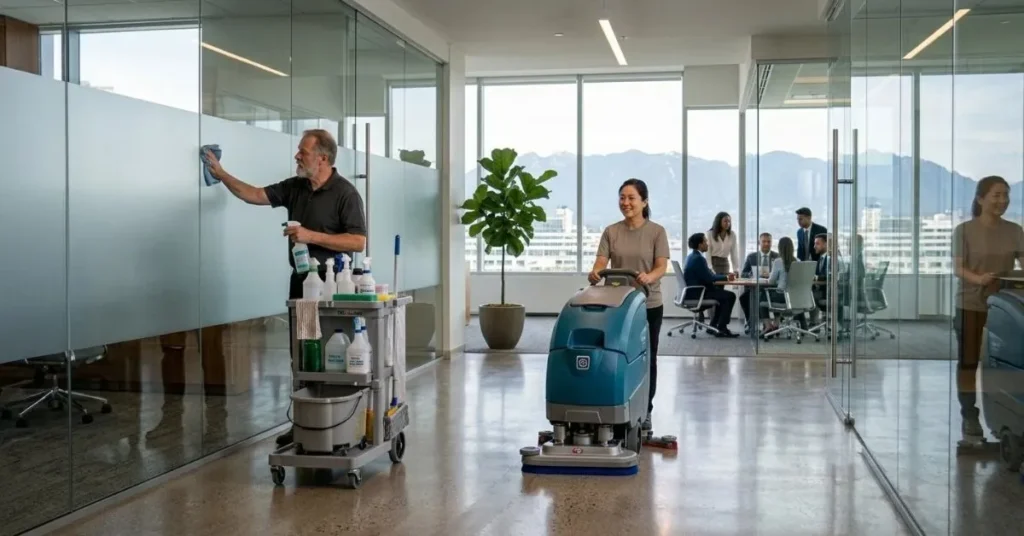
Recommended Janitorial Cleaning Frequency for Different Businesses
Most businesses need janitorial services in Vancouver one to five times weekly. The right schedule depends on workplace activity, building size, and daily use. High-traffic spaces usually need more attention.
This problem happens when businesses choose cleaning visits without checking daily needs. A small office may need weekly cleaning, while a busy clinic needs daily care. Your cleaning plan should match your actual workplace conditions.
Daily Janitorial Services for High Traffic Businesses
Daily janitorial services suit busy workplaces with constant foot traffic. These include medical clinics, restaurants, gyms, and large office buildings. These spaces collect dirt and waste throughout the day.
Daily cleaning helps control germs and keeps shared areas fresh. Cleaners can empty bins, clean washrooms, and sanitize high touch surfaces. They can also vacuum floors and clean kitchen areas.
Daily cleaning helps your business maintain a clean and welcoming environment. It also helps prevent dirt and waste from building up.
Janitorial Services Two to Three Times Per Week
Janitorial services two to three times weekly suit workplaces with moderate traffic. These include small offices, professional firms, and some commercial spaces. They may have fewer visitors and employees than busy facilities.
This schedule keeps shared spaces clean without daily visits. Cleaners can vacuum floors, empty bins, and clean washrooms. They can also wipe desks and kitchen surfaces.
You can choose this schedule when your workplace stays reasonably clean between visits. Increase visits if employees report hygiene problems or shared areas become messy.
Janitorial Services Three to Five Times Per Week for Busy Workplaces
Three to five weekly cleaning visits suit workplaces with regular, heavy activity. These businesses may operate most weekdays and welcome many visitors. Their cleaning needs often change throughout the week.
This schedule helps maintain clean floors, washrooms, and shared spaces. It also supports workplaces that experience busy mornings or afternoons. Your cleaning team can focus on high use areas during each visit.
This option offers more frequent care without requiring seven day service. You can adjust visits around your business hours and staff needs.
Weekly Janitorial Services for Small Offices
Weekly janitorial services can suit small offices with low daily occupancy. These workplaces often have fewer employees and limited visitor traffic. They may also have fewer shared facilities.
A weekly visit can include vacuuming, mopping, dusting, and trash removal. Cleaners can also clean washrooms and wipe shared surfaces. Employees should manage small spills between scheduled visits.
Weekly cleaning works best when the office stays tidy between visits. Increase the frequency if dirt, waste, or washroom issues become common.
Periodic Deep Cleaning for Commercial Spaces
Periodic deep cleaning removes built up dirt from areas regular cleaning may miss. Most businesses need these services alongside their normal janitorial schedule. The timing depends on floor materials, building use, and maintenance needs.
This service may include carpet extraction, floor scrubbing, window cleaning, and detailed baseboard cleaning. It can also address neglected corners and hard to reach areas. These tasks help maintain your building’s overall appearance.
Your business may need deep cleaning monthly, quarterly, or annually. Choose the timing based on actual conditions rather than a fixed rule.
When Your Business Needs Day Porter Services
Day porter services help maintain cleanliness during regular business hours. They suit busy offices, commercial buildings, shopping spaces, and shared facilities. These services support your regular evening or overnight cleaning schedule.
This problem happens when visitors create mess throughout the day. Washrooms need attention, bins fill quickly, and entrances collect dirt. A day porter can respond to these issues as they occur.
Typical duties include restroom checks, spill cleanup, trash removal, and entrance maintenance. Day porter services help keep busy workplaces presentable between scheduled cleaning visits.
Key Factors That Determine Your Janitorial Cleaning Frequency
Your ideal cleaning frequency depends on how people use your workplace. Employee numbers, visitor traffic, and business activities all matter. Your building’s daily conditions should guide your cleaning plan.
Customers and employees expect clean, safe, and comfortable spaces. This problem happens when businesses choose schedules without reviewing actual cleaning needs. You can solve this by checking workplace activity and shared areas regularly.
Employee Count and Daily Workplace Occupancy
Employee count affects how often your workplace needs janitorial services. More employees usually create more waste, dust, and floor dirt. Shared kitchens and washrooms also receive more daily use.
A busy office may need several weekly visits. A smaller office may need fewer visits. Daily occupancy matters more than employee numbers alone.
Hybrid workplaces need flexible cleaning schedules. Some offices stay busy on certain weekdays but remain quiet otherwise. You can schedule extra visits around your busiest days.
Customer Traffic and Public Access
Businesses with frequent visitors often need more regular cleaning. Customers, suppliers, and guests bring dirt into commercial spaces. They also use washrooms, entrances, and waiting areas.
This problem happens when businesses welcome visitors throughout the day. Floors become dirty, bins fill quickly, and reception areas lose their appeal. You can solve this by increasing cleaning visits where needed.
Retail stores, clinics, and customer service offices often need closer attention. Their cleaning schedules should reflect visitor numbers and daily activity.
Business Type and Workplace Activities
Your industry affects the type and frequency of janitorial services you need. Different workplaces have different cleaning demands. A medical clinic does not have the same needs as a small office.
For example, clinics need careful attention to hygiene and shared surfaces. Restaurants need regular kitchen and dining area cleaning. Offices may focus more on washrooms, floors, desks, and meeting rooms.
Your cleaning plan should match your workplace activities. This helps your team focus on the areas that need attention most.
Operating Hours and Hybrid Work Schedules
Your operating hours help determine the best time for janitorial visits. Some businesses need cleaning before opening or after closing. Others need daytime support during busy periods.
This problem happens when cleaning interrupts staff or customer activities. Evening visits may suit offices that close after regular business hours. Daytime visits may suit buildings with constant public access.
Hybrid work also changes cleaning needs. Some offices have fewer employees on certain days. You can schedule more visits around peak attendance and business activity.
Recommended Cleaning Frequency for Different Workplace Areas
Different workplace areas need different cleaning schedules. Washrooms, entrances, kitchens, and workstations receive different levels of daily use. A single cleaning frequency may not suit every area.
This problem happens when cleaners follow the same routine throughout the building. Some areas become dirty faster than others. You can solve this by setting priorities for each space.
Washrooms and Shared Kitchens
Washrooms and shared kitchens often need daily attention in busy workplaces. Many employees and visitors use these areas throughout the day. Dirt, waste, and spills can build up quickly.
Cleaning may include toilets, sinks, counters, floors, and touchpoints. Staff should also check soap, paper towels, and other supplies. High use facilities may need several checks during business hours.
Smaller offices may need fewer cleaning visits. However, employees should report spills and hygiene problems quickly. This helps keep shared spaces comfortable.
Entrances, Reception Areas and Commercial Floors
Entrances, reception areas, and commercial floors need cleaning based on foot traffic. These areas collect dirt from shoes and outdoor surfaces. Visitors also notice their condition when entering your building.
Vancouver’s wet weather can bring mud and moisture indoors. Cleaners may need to mop floors and clean entrance mats more often. They should also remove dirt before it spreads.
Busy entrances may need daily cleaning or extra attention during the day. Regular floor care helps protect surfaces and maintain a professional appearance.
Workstations and High Touch Surfaces
Workstations and high touch surfaces need regular cleaning based on shared use. These areas include desks, door handles, switches, and shared equipment. Many employees touch these surfaces throughout the day.
Cleaners can wipe shared surfaces during scheduled visits. Businesses should also encourage employees to keep personal work areas tidy. Frequently touched surfaces may need daily attention in busy workplaces.
The cleaning team should use suitable products for each surface. They should follow product instructions and workplace safety guidance.
How Vancouver Weather Affects Your Janitorial Cleaning Schedule
Vancouver weather can increase cleaning needs around entrances and commercial floors. Rain, mud, and moisture often enter buildings on shoes. These conditions can make floors dirty faster.
This problem happens when businesses use the same schedule throughout every season. Wet weather can increase dirt near entrances and reception areas. You can solve this by adjusting floor care during rainy periods.
Rainy Season, Mud and Moisture at Building Entrances
Vancouver’s rainy season often increases entrance cleaning needs. Wet shoes bring moisture, mud, and dirt inside buildings. Entrance mats can also become dirty quickly.
Cleaners should check mats, floors, and entryways regularly. They may need extra mopping during busy periods. Frequent entrance care helps reduce tracked in dirt throughout your workplace.
Businesses can also place suitable mats near entrances. Staff should report wet floors quickly to reduce slip risks.
Winter Floor Maintenance and Increased Cleaning Needs
Winter floor maintenance helps control moisture, dirt, and tracked in debris. Rainy and cold conditions can affect commercial floors. Some areas may also collect more dirt during busy periods.
This problem happens when wet floors receive little attention. Dirt can spread into hallways and shared spaces. Regular sweeping and mopping help manage this issue.
Your business may need extra floor care during wetter months. Choose suitable cleaning products for your floor materials. Follow product instructions to protect surfaces and reduce slip risks.
Signs Your Business Needs More Frequent Janitorial Services
Your business may need more frequent cleaning when dirt and waste build up between visits. Dirty floors, unpleasant washroom smells, and overflowing bins are common warning signs. These problems can affect employees and visitors.
This problem happens when the current schedule cannot keep up with workplace activity. Customers may notice messy reception areas or dirty shared facilities. Employees may also raise concerns about cleanliness.
Watch for these signs:
- Washroom supplies run out before the next cleaning visit.
- Trash bins overflow regularly.
- Kitchen counters stay dirty between visits.
- Floors collect visible dirt and moisture.
- Unpleasant smells remain in shared areas.
- Visitors complain about workplace cleanliness.
- Shared surfaces need attention more often.
You can solve these problems by reviewing your current cleaning schedule. Check which areas need more attention and when problems occur. Then adjust the cleaning plan to match your workplace.
Conclusion
The right janitorial schedule keeps your business clean without unnecessary visits. Your ideal frequency depends on occupancy, visitor traffic, and workplace activities. Vancouver’s rainy weather can also increase floor and entrance cleaning needs.
With 10+ years of cleaning experience, Brighter Cleaning & Maintenance Services understands commercial cleaning needs. We provide janitorial services and building maintenance for different workplaces. Our team focuses on clean spaces and practical cleaning plans.
Your workplace deserves a cleaning schedule that fits its needs. Contact Brighter Cleaning & Maintenance Services for a free estimate. Let us help keep your Vancouver business clean and welcoming.