SAVE25
Up to 25% off for online bookings — from the 20th to the 5th of each month
Ends 5 Aug →

What Are Janitorial Services and What Do They Include?
Janitorial services provide regular cleaning and upkeep for offices, commercial buildings, and other business spaces. Dirty floors, dusty desks, full garbage bins, and messy washrooms can hurt your workplace. These problems also make employees and visitors feel uncomfortable.
This problem happens when businesses lack a regular cleaning plan. Dust, dirt, germs, and waste build up without proper care. Professional janitorial cleaning services help keep your workplace clean, safe, and welcoming. Our team understands these needs through more than 10 years of cleaning experience.
If you own or manage a business in Vancouver, you need the right cleaning plan. But what does janitorial cleaning actually include? This guide explains common services, cleaning schedules, benefits, and provider responsibilities. You will also learn what Vancouver businesses should consider when hiring a cleaning company.
What Are Janitorial Services?
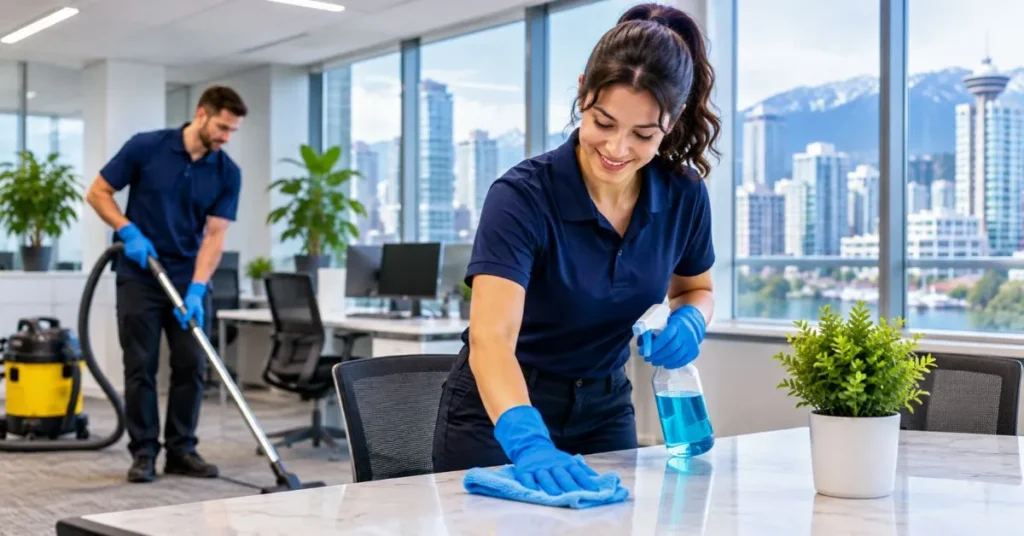
Janitorial services are regular cleaning and maintenance tasks that keep commercial spaces clean and tidy. These services help businesses maintain clean offices, washrooms, floors, and shared areas. Professional cleaners follow a set plan to manage daily cleaning needs.
This service covers many tasks. Cleaners remove garbage, wipe surfaces, clean washrooms, and maintain floors. They also restock basic supplies when the agreement includes them.
Janitorial services in Vancouver help businesses maintain clean and welcoming spaces. Offices, stores, and commercial buildings all need regular care. A reliable cleaning plan also helps prevent dirt from building up over time.
Janitorial Services vs Commercial Cleaning
Janitorial services focus on routine cleaning, while commercial cleaning often covers larger or specialized cleaning jobs. Both services help businesses maintain clean and healthy spaces. However, they usually involve different tasks and schedules.
Janitorial cleaners handle regular upkeep. They clean washrooms, empty bins, mop floors, and wipe surfaces. Commercial cleaning teams may handle deeper tasks that need special tools or methods.
Customers often confuse these two services. You can choose the right option by understanding your cleaning needs. Some businesses need both services throughout the year.
What Are Commercial Cleaning Services?
Commercial cleaning services cover professional cleaning tasks for business properties. These jobs may include deep floor cleaning, carpet extraction, window cleaning, and post-construction cleanup.
These tasks often need special tools and cleaning methods. Some jobs also require more time and trained staff. Businesses usually book them when regular cleaning cannot meet their needs.
For example, a Vancouver office may need weekly janitorial care. The same office may also need periodic carpet cleaning. A combined cleaning plan can address both needs.
Key Differences Between Janitorial and Commercial Cleaning
Janitorial cleaning handles regular upkeep, while commercial cleaning often focuses on deeper or specialized tasks. The main differences involve cleaning frequency, task types, equipment, and service needs.
Here is a simple comparison:
Janitorial Services | Commercial Cleaning |
Regular cleaning and upkeep | Deep and specialized cleaning |
Daily or weekly schedules | One-time or planned visits |
Washroom and kitchen cleaning | Carpet and upholstery extraction |
Garbage and recycling removal | Specialized floor care |
Dusting and surface wiping | Detailed window cleaning |
Routine floor maintenance | Floor stripping and polishing |
Some companies offer both services. Your needs depend on your building and cleaning plan. Always check which tasks your service agreement includes.
Which Tasks Require Specialized Cleaning Services?
Tasks that need special tools, methods, or training may require separate cleaning services. Routine janitorial work does not always cover every cleaning need.
These tasks may include:
- Carpet steam cleaning: Removes deeper dirt from carpet fibres.
- High window cleaning: Requires suitable tools and safe access methods.
- Floor stripping and waxing: Restores certain hard floor surfaces.
- Post-construction cleaning: Removes dust and debris after building work.
- Pressure washing: Cleans suitable outdoor surfaces.
- Biohazard cleanup: Requires specialized training and safety procedures.
Customers should discuss these tasks before signing an agreement. This helps prevent confusion about service costs and responsibilities.
What Do Janitorial Services Typically Include?
Janitorial services typically include washroom cleaning, garbage removal, floor care, dusting, and common-area maintenance. The exact tasks depend on your building and service agreement.
A professional cleaning team follows a regular checklist. This helps cleaners manage important areas without missing routine tasks. Businesses can also request extra services based on their needs.
Here are the common tasks included in commercial janitorial services.
Restroom Cleaning and Sanitation
Restroom cleaning includes washing and disinfecting toilets, sinks, counters, and other bathroom surfaces. Clean washrooms help employees and visitors feel comfortable.
Cleaners scrub toilets, urinals, sinks, and washroom floors. They wipe mirrors, counters, and door handles. They also empty bins and clean visible dirt.
Restroom supply management may include checking soap, toilet paper, and paper towels. Regular cleaning also helps control unpleasant smells. Businesses should request a clear washroom cleaning schedule.
Trash and Recycling Removal
Trash and recycling removal keeps business spaces free from waste and unwanted smells. Full bins can attract pests and make workplaces look untidy.
Cleaners empty garbage bins and replace liners. They also collect waste from offices, kitchens, and shared areas. Some providers separate recyclable materials according to building rules.
Vancouver businesses should follow their building’s waste sorting requirements. Clear labels can help employees use the correct bins. Regular waste removal keeps shared spaces more organized.
Floor Cleaning and Maintenance
Floor cleaning includes sweeping, vacuuming, mopping, and maintaining different floor surfaces. Dirty floors can make your business look poorly maintained.
Cleaners remove dust, dirt, and loose debris from floors. They vacuum carpets and rugs in suitable areas. They also mop hard floors using suitable cleaning products.
Different floors need different care. Tile, vinyl, hardwood, and carpet require suitable cleaning methods. Regular maintenance helps protect floor surfaces from everyday dirt.
Dusting and High Touch Surface Disinfection
Dusting and high touch surface cleaning remove dust and help reduce germs on frequently used surfaces. These tasks support a cleaner workplace.
Cleaners wipe desks, shelves, counters, and other suitable surfaces. They also clean door handles, switches, handrails, and shared touchpoints. Regular attention helps control dirt in busy areas.
The company should use suitable cleaning products for each surface. Product instructions also matter. Proper use helps avoid surface damage and supports safe cleaning.
Kitchen and Break Room Cleaning
Kitchen and break room cleaning keeps shared food areas tidy and comfortable. Employees use these spaces throughout the workday. Food spills and dirty counters can create unpleasant conditions.
Cleaners wipe tables, counters, and sinks. They also clean appliance exteriors, including microwaves and refrigerators. They empty bins and mop kitchen floors.
Businesses should also set clear rules for personal food storage. Regular cleaning helps maintain a more pleasant shared space. Deep appliance cleaning may require a separate agreement.
Lobby, Reception, and Common Area Cleaning
Common area cleaning keeps lobbies, reception areas, hallways, and shared spaces neat. These areas often create the first impression for visitors.
Cleaners remove dust from furniture and wipe reception counters. They vacuum entrance mats and clean suitable floor surfaces. They also remove visible dirt from stairs and shared areas.
Vancouver buildings often experience wet floors during rainy months. Dirt and moisture can enter through busy entrances. Regular entrance cleaning helps keep these areas presentable.
Cleaning Supply and Consumables Management
Cleaning supply management involves checking and restocking agreed cleaning and washroom products. Businesses need these supplies for everyday use.
Cleaners may check soap, paper towels, toilet paper, and bin liners. They report low stock before supplies run out. Some agreements also cover cleaning products and equipment.
The company should explain who pays for supplies. Some providers bring their own products. Others use supplies purchased by the business.
Which Types of Facilities Need Janitorial Services?
Offices, retail stores, medical facilities, schools, and warehouses can all benefit from janitorial services. Each property has different cleaning needs and daily activity levels.
Busy spaces collect dirt faster. Shared washrooms and kitchens also need regular attention. A suitable cleaning plan helps businesses maintain clean facilities.
Here are common property types that use professional janitorial cleaning services.
Office Buildings and Workspaces
Office buildings need regular cleaning to maintain clean desks, floors, washrooms, and shared areas. Employees spend many hours inside these spaces.
Cleaners vacuum carpets and wipe suitable surfaces. They empty bins and clean meeting rooms. They also maintain kitchens, washrooms, and reception areas.
Businesses can arrange cleaning after working hours. This helps reduce disruption during busy office days.
Retail Stores and Commercial Properties
Retail stores need clean floors, entrances, washrooms, and customer areas. Customers notice dirty floors and messy displays.
Cleaners remove visible dirt and empty waste bins. They also maintain fitting rooms and shared spaces when included. Busy stores may need more frequent cleaning.
A regular cleaning plan helps maintain a welcoming shopping environment. It also supports daily store operations.
Medical and Healthcare Facilities
Medical facilities need careful cleaning to support hygiene and reduce contamination risks. These spaces often have stricter cleaning needs than regular offices.
Cleaners may maintain waiting rooms, floors, washrooms, and shared surfaces. They must follow the facility’s cleaning procedures. Some areas require approved products and specialized training.
Healthcare cleaning should follow the facility’s safety and infection control rules. Not every janitorial provider offers this service. Always confirm the provider’s training and experience.
Schools and Educational Facilities
Schools need regular cleaning to maintain classrooms, washrooms, hallways, and shared spaces. Students and staff use these areas every day.
Cleaners wipe desks, clean floors, and empty bins. They also maintain washrooms and common areas. Busy schools may need more frequent cleaning during the week.
A suitable schedule can reduce disruption during lessons. Many schools prefer cleaning after classes finish.
Warehouses and Industrial Buildings
Warehouses and industrial buildings need cleaning to manage dust, waste, and busy work areas. These facilities often have large floors and heavy daily activity.
Cleaners may sweep floors and remove general waste. They can also maintain washrooms, offices, and staff areas. Some facilities need special floor care or industrial cleaning methods.
The cleaning plan should match the building’s work activities. Safety rules also matter. Businesses should discuss equipment access and restricted areas before service begins.
What Are the Benefits of Professional Janitorial Services?
Professional janitorial services help businesses maintain cleaner, healthier, and more welcoming workplaces. Regular cleaning also reduces the daily cleaning workload for employees.
Dirty workspaces can affect comfort and business image. Customers may notice messy entrances and washrooms. Employees also need clean areas to work comfortably.
A reliable cleaning schedule helps manage these problems. Businesses can focus on their daily work while cleaners handle agreed tasks.
Improved Workplace Hygiene and Cleanliness
Regular janitorial cleaning helps control dust, dirt, waste, and surface contamination. Clean spaces are easier to manage and maintain.
Cleaners follow a regular plan for washrooms, floors, and shared surfaces. They also remove garbage and visible dirt. This helps prevent everyday mess from building up.
However, cleaning does not replace proper workplace hygiene practices. Employees should also follow handwashing and waste disposal rules.
A Healthier and More Comfortable Work Environment
A clean workplace helps employees and visitors feel more comfortable. Dusty desks, dirty floors, and unpleasant washrooms can create daily problems.
Regular cleaning helps remove dust and common dirt. Cleaners also maintain shared kitchens and washrooms. These tasks support a more pleasant workplace.
Businesses should choose cleaning methods that suit their facilities. Good cleaning habits also help protect shared spaces.
Reduced Cleaning Responsibilities for Employees
Professional janitorial services reduce the time employees spend handling routine cleaning tasks. Staff can focus more on their main responsibilities.
Employees should not need to manage every garbage bin or washroom task. A cleaning team can handle agreed duties. This makes daily operations easier to manage.
Business owners can also set clear cleaning responsibilities. Everyone knows which tasks belong to the cleaning team.
How Often Do Businesses Need Janitorial Services?
Businesses usually need janitorial cleaning daily, weekly, or on a customized schedule. The right frequency depends on building size, foot traffic, and daily activities.
A busy office may need daily cleaning. A small workspace may need fewer visits. Washrooms, kitchens, and entrances often need more attention.
Your cleaning company can assess the building before suggesting a schedule. This helps match the service to your actual needs.
Daily and Nightly Janitorial Cleaning
Daily and nightly janitorial cleaning helps busy businesses maintain clean spaces throughout the week. It works well for buildings with regular staff and visitor traffic.
Cleaners can empty bins, vacuum floors, and wipe shared surfaces. They can also clean washrooms and kitchens. Nightly visits help prepare the workplace for the next business day.
Some businesses need cleaning during operating hours. Others prefer evening visits. The best option depends on building access and daily activities.
Weekly and Biweekly Janitorial Cleaning
Weekly and biweekly cleaning works well for businesses with lower daily cleaning needs. Smaller offices may not need a cleaning team every day.
Cleaners can handle floors, washrooms, dusting, and garbage removal. The task list depends on the time between visits. Businesses may need extra attention for busy areas.
This schedule can suit smaller commercial spaces. However, high-use washrooms and kitchens may need more frequent care.
Day Porter and After Hours Cleaning
Day porter services provide cleaning support during business hours, while after-hours cleaning happens outside normal operations. Both options help businesses maintain clean spaces.
Day porters can check washrooms, remove visible waste, and clean spills. They may also maintain entrances and shared areas. Their tasks depend on the service agreement.
After-hours cleaners usually handle larger routine cleaning tasks. They can vacuum, mop, dust, and clean washrooms. Businesses can choose the schedule that causes less disruption.
Customized Janitorial Cleaning Schedules
Customized janitorial cleaning schedules match cleaning tasks with your building’s daily needs. Every business has different cleaning priorities.
A cleaning company can review your floor space and foot traffic. It can also check washroom use and operating hours. Then, the company can create a suitable task list.
Some areas may need daily cleaning. Others may only need weekly attention. A clear schedule helps everyone understand the service.
What Should Businesses Expect from a Janitorial Service Provider?
Businesses should expect trained cleaners, suitable equipment, clear cleaning checklists, and consistent service. A professional provider should explain what the agreement covers.
Customers struggle when cleaning companies do not explain their responsibilities. Missed tasks and unclear schedules can create problems. Clear communication helps prevent these issues.
Before hiring a provider, discuss your building and cleaning needs. Ask for a site review and written service details. This helps you understand what the company will deliver.
Trained Cleaning Professionals
Trained cleaning professionals understand suitable cleaning methods, product use, and workplace safety. Their knowledge helps them handle different cleaning tasks.
Cleaners should know how to use cleaning products correctly. They should also understand surface care and basic safety rules. Some facilities require additional training.
Businesses should ask about staff training and supervision. Healthcare and industrial facilities may need more specialized skills. Always match the provider’s experience to your property.
Cleaning Equipment and Supplies
A janitorial provider should explain which cleaning equipment and supplies the service includes. This helps businesses plan their cleaning budget.
Some companies bring vacuums, mops, cloths, and cleaning products. Others use supplies provided by the business. The agreement should explain these details.
Ask who replaces damaged equipment and restocks products. Clear arrangements help avoid unexpected costs. They also keep cleaning work organized.
Customized Cleaning Checklists
Customized cleaning checklists show which tasks cleaners must complete during each visit. They help both businesses and cleaning teams track responsibilities.
A checklist may include washrooms, floors, kitchens, and garbage removal. It can also list shared areas and supply checks. Each task should match the service agreement.
Business owners can review the checklist when needed. This helps identify missed tasks. It also supports better communication with the cleaning company.
Consistent Cleaning and Quality Control
Quality control helps cleaning companies maintain consistent service standards. Regular checks can identify missed tasks and areas that need attention.
A supervisor may review completed work. The company can also collect customer feedback. These steps help improve cleaning results over time.
Businesses should ask how the provider handles complaints. They should also ask how the company checks completed tasks. Clear quality checks build trust.
What Factors Affect Janitorial Service Requirements?
Facility size, foot traffic, cleaning needs, and operating hours affect janitorial service requirements. These factors help determine the work, time, and staff needed.
A small office needs a different plan from a large warehouse. Busy washrooms also need more attention than quiet storage areas. Your cleaning schedule should reflect these differences.
A site visit helps the provider understand your building. It also helps both sides agree on realistic cleaning tasks.
Facility Size and Layout
Larger facilities usually need more cleaning time, staff, and equipment. Building layout also affects how cleaners move between areas.
A multi-floor office may need stairway and elevator cleaning. Large buildings may also have several washrooms and kitchens. These areas can increase the cleaning workload.
Businesses should share floor plans when possible. A site visit can help identify important areas. This makes planning more accurate.
Employee and Visitor Traffic
High employee and visitor traffic increases the need for regular cleaning. Busy areas collect more dirt and waste throughout the day.
Building entrances often collect dirt from shoes. Washrooms and kitchens also need regular attention. Customer-facing areas may need extra checks.
The company can adjust cleaning frequency based on daily activity. This helps keep busy spaces cleaner.
Cleaning Requirements and Priorities
Each business needs a cleaning plan based on its main priorities. Some facilities need more washroom care, while others need more floor maintenance.
A retail store may focus on customer areas. An office may need regular desk and meeting room cleaning. A warehouse may need more floor and waste management.
Customers should list their most important cleaning tasks. The provider can use this list to build a suitable service plan.
Cleaning Frequency and Operating Hours
Cleaning frequency and operating hours determine when cleaners visit and how much work they complete. These details help prevent disruption.
Some businesses prefer evening cleaning. Others need daytime support from a porter. Buildings with longer operating hours may need more frequent visits.
The company should discuss access times and security rules. A clear schedule helps cleaners complete tasks safely and on time.
Janitorial Cleaning Considerations for Vancouver Businesses
Vancouver businesses need janitorial plans that address wet weather, building entrances, waste handling, and workplace safety. Local conditions can affect daily cleaning needs.
Rain can bring water, mud, and dirt into commercial buildings. Busy entrances and hallways may need extra care. Proper floor maintenance helps keep these areas presentable.
Businesses should also consider building rules and local waste requirements. A cleaning provider should understand the property’s needs. This helps create a practical cleaning plan for Vancouver workplaces.
Managing Rainwater, Dirt, and Moisture at Building Entrances
Vancouver businesses should manage rainwater and dirt at entrances through regular cleaning and proper floor care. Wet shoes can bring moisture inside.
Cleaners can vacuum entrance mats and remove visible dirt. They can also mop suitable floors when needed. Regular checks help manage wet areas.
Businesses can place suitable mats near entrances. They should also address spills quickly. These steps help maintain cleaner entryways.
Maintaining Commercial Floors During Wet Weather
Commercial floors need regular care during Vancouver’s wet weather. Rainwater and tracked-in dirt can make floors look messy.
Cleaners should use suitable methods for each floor type. They can sweep, vacuum, and mop based on the surface. Entrance areas may need more frequent attention.
Businesses should also address wet floor hazards quickly. Suitable warning signs can alert visitors and staff. Safe floor care helps maintain a clean workplace.
Waste Sorting and Recycling Requirements
Vancouver businesses should follow their building’s waste sorting and recycling procedures. Different waste types may need separate bins.
Cleaning teams can empty bins and replace liners. They can also move waste to the correct collection areas when included. Clear labels help reduce sorting mistakes.
Businesses should explain their waste rules to cleaners. This includes recycling, compost, and general garbage. Proper waste handling keeps shared areas organized.
Safe Handling of Commercial Cleaning Products
Commercial cleaning products require proper handling, storage, and use. Incorrect use can create risks for cleaners and building occupants.
Cleaning staff should follow product labels and safety instructions. They should also use suitable protective equipment. Canadian workplaces should follow applicable WHMIS requirements for hazardous products.
Businesses should ask about staff training and product safety. They should also discuss storage arrangements. Proper handling supports safer cleaning operations.
Conclusion
Janitorial services help Vancouver businesses maintain clean, organized, and welcoming commercial spaces. These services include washroom cleaning, floor care, dusting, garbage removal, and common-area maintenance. The right schedule depends on your building, traffic, and cleaning needs.
Choosing a reliable provider also matters. Look for trained cleaners, clear checklists, suitable equipment, and regular quality checks. A good service agreement should explain every included task. It should also cover cleaning schedules and supply responsibilities.
Brighter Cleaning & Maintenance Services helps businesses maintain cleaner commercial spaces in Vancouver. Our team focuses on reliable cleaning, clear communication, and service plans that match your needs. Contact us today to discuss your janitorial cleaning requirements and request a quote. We are ready to help keep your workplace clean and welcoming.