SAVE25
Up to 25% off for online bookings — from the 20th to the 5th of each month
Ends 5 Aug →

How Long Does It Take for Carpet to Dry After Professional Cleaning?
Professionally cleaned carpets usually take 6 to 12 hours to dry, but some need 24 hours or longer. You may worry about damp floors, furniture, and musty smells after cleaning. Nobody wants to wait all day before using their living room again.
This problem happens when carpet fibres and padding hold extra moisture after cleaning. Vancouver’s damp weather can also slow drying when indoor humidity stays high. The cleaning method, equipment, and airflow all affect the final drying time.
You can solve this by improving airflow and managing indoor moisture. For additional help, explore our professional carpet cleaning services. This guide explains drying times for different cleaning methods, common delays, and safe drying tips. You will also learn when to walk on your carpet and when to contact your cleaning provider.
How Long Does Carpet Take to Dry by Cleaning Method?
Most professionally cleaned carpets dry within 6 to 12 hours, depending on the cleaning method. Some low moisture methods dry much faster. Thick carpets and damp rooms may need more time.
Your carpet’s drying time depends on how much water remains after cleaning. Professional cleaners use different methods for different carpet types and soil levels. Ask your cleaner for an estimate based on your carpet and home.
Hot Water Extraction and Steam Cleaning Drying Time
Hot water extraction usually takes 6 to 12 hours to dry. Some carpets need 24 hours or longer. This method sprays cleaning solution into the carpet and removes dirt with strong suction.
Customers often choose this method for deep cleaning. However, poor airflow and high humidity can slow drying. Good water extraction helps remove more moisture before the cleaner leaves.
Low Moisture and Encapsulation Cleaning Drying Time
Low moisture cleaning often dries within 1 to 4 hours. The exact time depends on the product, carpet, and equipment. Encapsulation cleaning uses a special solution that captures dirt as it dries.
This method uses less water than many deep cleaning methods. It can suit carpets that need faster drying. Your cleaner should still check whether this method fits your carpet.
Bonnet Cleaning Drying Time
Bonnet cleaning often takes around 2 to 4 hours to dry. Drying times vary with moisture levels and room conditions. This method uses a rotating pad to clean the carpet surface.
It can help refresh carpets with light surface soil. However, it may not remove deep dirt as well as extraction cleaning. Your cleaner can recommend the right method for your needs.
Dry Carpet Cleaning Drying Time
Dry carpet cleaning may take 15 minutes to 2 hours before normal use. Some products need more time, so always follow the cleaner’s advice. This method uses little moisture and a cleaning compound.
It can help when quick room access matters. However, results depend on the carpet and the chosen product. Ask about the method before booking your appointment.
What Factors Affect Carpet Drying Time?
Humidity, carpet thickness, airflow, and water extraction all affect drying time. A thin carpet in a warm room may dry quickly. A thick carpet in a damp room may stay wet much longer.
Customers struggle most when moisture remains trapped below the carpet surface. Carpet padding can hold water even when the top feels dry. Understanding these factors helps you plan cleaning around your daily routine.
Indoor Humidity and Vancouver Weather Conditions
High indoor humidity can slow carpet drying in Vancouver homes. Rainy weather may limit your ability to open windows. However, outdoor rain does not always mean indoor air is too damp.
This problem happens when moist indoor air cannot release enough water. Keep doors open where practical and improve indoor air movement. A dehumidifier can help when indoor humidity remains high.
Carpet Fibre, Pile Thickness, and Backing
Thick carpet fibres and dense backing can increase drying time. Some materials hold more moisture than others. Wool and plush carpets may need different care than low pile synthetic carpets.
Your cleaner should consider the carpet material before choosing a method. Follow any care instructions for delicate fibres. The right approach helps protect the carpet while supporting better drying.
Carpet Padding and Moisture Retention
Carpet padding can hold moisture after the surface feels dry. This can make the full carpet take longer to dry. Thick padding and excess water can increase the delay.
Do not judge dryness by touch alone. Check whether dampness remains near the carpet edges or seams. Contact your cleaner if the carpet stays wet longer than expected.
Airflow and Indoor Temperature
Good airflow and moderate indoor warmth help carpets dry faster. Still air allows moisture to linger. Cool rooms can also slow evaporation.
Use fans to move air across the carpet. Keep indoor air moving without creating unsafe electrical conditions. Avoid extreme heat that could damage carpet fibres or backing.
Extraction Equipment and Cleaning Technique
Effective extraction equipment removes more water before drying begins. The cleaner’s technique also matters. Poor extraction can leave extra moisture deep inside the carpet.
Professional equipment can often remove more water than basic home machines. However, results depend on the equipment and the person using it. Ask our experienced carpet cleaners how they manage moisture after cleaning.
How to Dry Carpet Faster After Professional Cleaning
You can speed up drying by improving airflow and reducing indoor humidity. Start soon after the cleaning service ends. Small changes can help your carpet dry more evenly.
The best approach depends on your room and the weather outside. Avoid adding more water or using harsh heat. Follow the cleaning company’s care instructions for the best results.
Use Fans to Improve Air Circulation
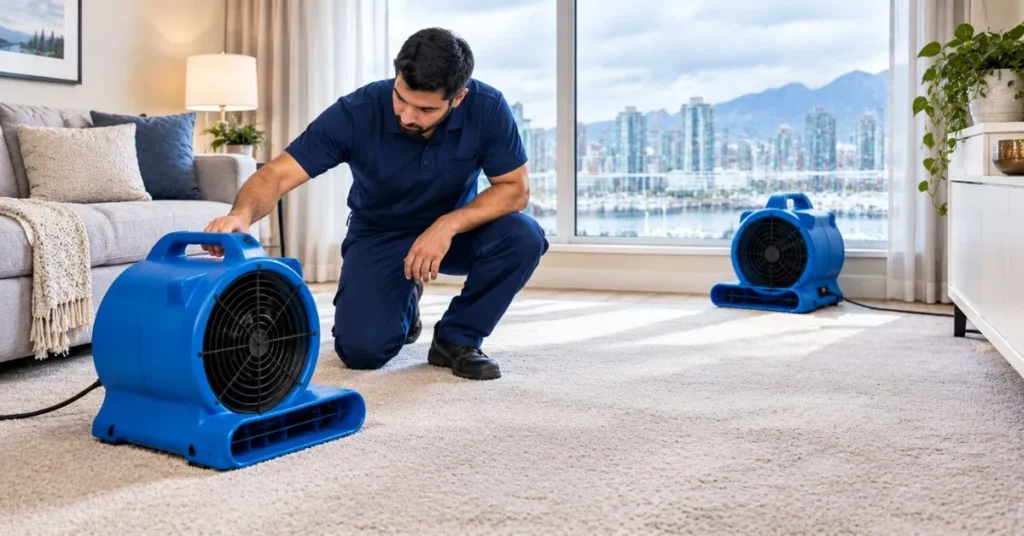
Fans help carpet dry faster by moving moist air away from its surface. Place a portable fan near the damp area. Aim airflow across the carpet rather than directly down.
Keep fans and power cords away from wet areas. Check the carpet as it dries. Move the fan if one area remains damp.
Use Air Conditioning or a Dehumidifier When Appropriate
A dehumidifier can help dry carpet when indoor humidity is high. Air conditioning may also help under suitable conditions. The right choice depends on your home’s temperature and humidity.
Close windows when outdoor air is humid. Follow the device instructions and keep equipment away from water. Empty the dehumidifier tank as needed.
Manage Window Ventilation During Vancouver’s Damp Weather
Open windows only when outdoor air can help lower indoor moisture. Rainy or humid conditions may not improve drying. Check the weather before relying on natural ventilation.
You can keep windows closed and use a dehumidifier instead. Use fans to maintain airflow indoors. This approach can work well during Vancouver’s wet seasons.
When Can You Walk on Carpet After Professional Cleaning?
You can often walk on cleaned carpet after several hours, but follow your cleaner’s instructions. Some low moisture methods allow earlier use. Wet carpet needs more care to avoid dirt and marks.
Customers should avoid street shoes on damp carpet. Wear clean socks if your cleaner permits light foot traffic. Keep children and pets away until the carpet is ready.
When Is It Safe to Resume Normal Foot Traffic?
Resume normal foot traffic once the carpet is fully dry or your cleaner approves it. Light use may be possible sooner with some methods. Avoid walking across wet areas whenever possible.
Damp fibres can attract dirt from shoes. Bare feet may also transfer oils to the carpet. Follow the advice given for your cleaning method.
When Can You Put Furniture Back on Cleaned Carpet?
Wait until the carpet is dry before returning heavy furniture whenever possible. Damp fibres can transfer moisture to furniture legs. Wood or metal may leave stains or marks.
If furniture must return early, ask your cleaner about protective blocks. Use suitable barriers that will not transfer colour or moisture. Check the carpet and furniture legs regularly.
Why Does Carpet Stay Damp After Professional Cleaning?
Carpet often stays damp because moisture remains in the fibres or padding. High humidity and poor airflow can make this worse. Extra water from cleaning can also extend drying time.
The surface may feel dry while deeper layers remain wet. This can cause lingering damp smells. Good extraction and ventilation help reduce the risk.
How Excess Moisture Affects Carpet Drying
Excess moisture makes carpet take longer to dry. Too much water may reach the padding beneath the carpet. That trapped moisture cannot escape as quickly as surface water.
A trained cleaner should use a method suited to your carpet. Tell the company if the carpet feels unusually wet after service. They can help assess the cause.
Why Is Carpet Still Wet 24 Hours After Cleaning?
Carpet that remains very wet after 24 hours needs attention. Thick padding, high humidity, or weak extraction may explain the delay. Persistent dampness deserves more than extra waiting.
Improve airflow and use a dehumidifier if appropriate. Contact your cleaning provider for advice. If you notice a musty smell or spreading dampness, act promptly.
What to Do If Your Carpet Is Still Damp the Next Day
Contact your carpet cleaning provider if your carpet remains damp the next day. Explain which areas feel wet and whether any smell has developed. Ask whether the company recommends a moisture check or further drying.
Keep air moving and reduce indoor humidity where possible. Avoid adding more cleaning solution or water. If the carpet or padding appears damaged, seek suitable professional help.
Does Dry to the Touch Mean the Carpet Is Completely Dry?
No, a carpet can feel dry on top while moisture remains underneath. Carpet fibres and padding do not always dry at the same rate. A quick touch test cannot confirm that every layer is dry.
Check more than one area, especially thicker or heavily cleaned sections. Notice any cool, damp feeling or musty smell. If you remain unsure, ask your cleaning provider to assess it.
How Does Professional Carpet Cleaning Compare With DIY Cleaning for Drying Time?
Professional carpet cleaning may dry faster than DIY cleaning when equipment removes more water. Home machines vary in suction strength and condition. Using too much solution can also leave extra moisture behind.
Professional results still depend on the method and technician. Some low moisture DIY products may dry quickly, too. Choose based on your carpet’s needs, the soil level, and the expected drying time.
Can Wet Carpet Develop Mould if It Takes Too Long to Dry?
Wet carpet can support mould growth when moisture remains for too long. Risk depends on the amount of water, temperature, and ventilation. Damp carpet does not mean mould will always develop.
Act quickly when carpet stays wet or develops a musty smell. Hidden moisture may affect the padding or floor beneath it. Do not ignore repeated dampness or signs of water damage.
Signs of Persistent Moisture and Musty Odours
A musty smell or lasting dampness may signal trapped moisture. Other warning signs include wet edges, dark patches, or damp padding. These signs need attention, especially when they persist.
Avoid masking smells with sprays or fragrances. Find the source of the moisture first. Contact a suitable professional if the carpet remains damp or shows possible mould.
When to Contact Your Carpet Cleaning Provider
Contact your cleaner when drying takes much longer than the estimate. Explain the cleaning method and how long the carpet has stayed damp. Share any musty smell or visible changes.
Your provider can suggest next steps based on the service performed. Seek a qualified restoration professional if you suspect hidden water damage or mould. Do not delay when dampness spreads or worsens.
Conclusion
Most professionally cleaned carpets dry within 6 to 12 hours, but conditions can change that estimate. Cleaning method, carpet thickness, humidity, and airflow all matter. Vancouver’s damp weather can make indoor moisture control especially useful.
Brighter Cleaning & Maintenance Services helps Vancouver customers care for their carpets with professional cleaning. We recommend suitable methods and practical drying steps for your home. Always follow the care advice provided for your carpet.
Need professional carpet cleaning in Vancouver? Contact Brighter Cleaning & Maintenance Services today. We can help you choose the right service and plan for a cleaner, fresher carpet.