SAVE25
Up to 25% off for online bookings — from the 20th to the 5th of each month
Ends 5 Aug →

Why Does My Carpet Smell Musty After Cleaning
A musty smell after carpet cleaning often means moisture remains trapped in the carpet or its padding. You expect fresh carpets after cleaning. Instead, a damp, sour smell can make your whole room feel unpleasant. This problem can worry homeowners, especially when the smell gets stronger.
This problem happens when carpets stay wet too long or cleaning leaves residue behind. Old pet stains can also release unpleasant smells when moisture reaches them. With over 10+ years of carpet cleaning experience, professional cleaners understand these common problems.
You can solve this by finding the source and helping your carpet dry properly. This guide explains the main causes, safe fixes, and ways to prevent future smells. You will also learn when professional carpet cleaning in Vancouver BC, may help.
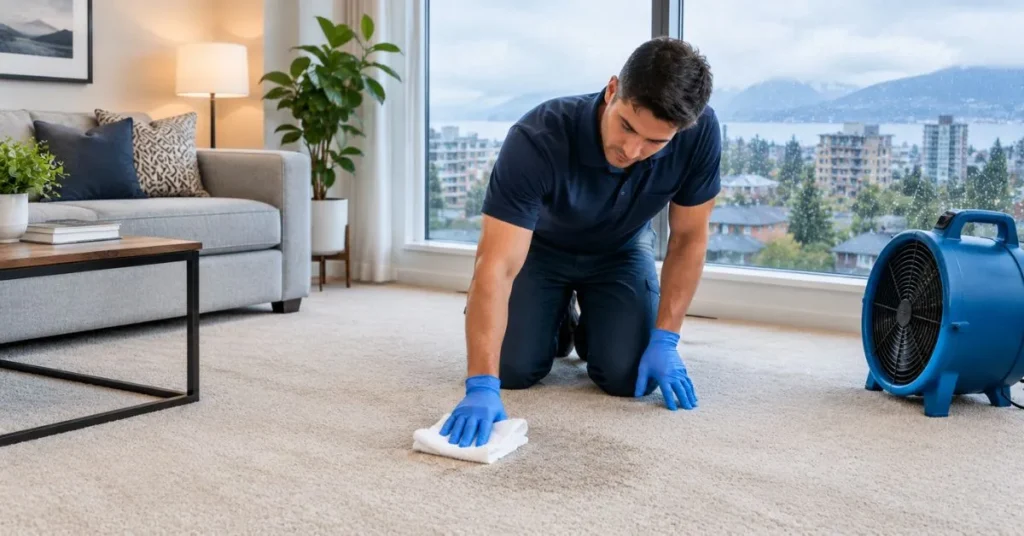
What Causes Musty Odours After Carpet Cleaning?
Musty carpet odours usually come from trapped moisture, poor airflow, cleaning residue, or old spills. These problems can happen after professional cleaning or DIY carpet washing. The right fix depends on what caused the smell.
Trapped Moisture in Carpet Padding
Trapped moisture in carpet padding can cause musty smells after cleaning. Water can move beyond the carpet fibres into the layer underneath. That deeper layer often dries more slowly than the carpet surface.
Customers struggle with this problem because the carpet may feel dry on top. However, the padding can still hold moisture. Check for lingering dampness and improve airflow before the smell gets worse.
Excess Water and Inadequate Extraction
Excess water and weak extraction can leave carpets wetter than necessary. Some DIY machines remove less water than expected. Poor cleaning methods can also leave moisture deep inside the carpet.
This problem happens when too much water enters the carpet during cleaning. The carpet then takes longer to dry. Effective water extraction helps remove moisture and supports faster drying.
Poor Airflow and High Indoor Humidity
Poor airflow and high indoor humidity can slow carpet drying. Closed windows, limited ventilation, and damp weather can keep moisture inside your home. Vancouver’s rainy season can make indoor drying more challenging.
Customers struggle with damp carpets when air cannot move freely. You can solve this by running fans and improving ventilation. A dehumidifier can also help lower indoor moisture when conditions allow.
Leftover Cleaning Solution Residue
Leftover cleaning solution can cause sour smells and attract fresh dirt. Too much detergent may leave a film on carpet fibres. Poor rinsing can make this problem worse.
The residue may feel sticky and hold dirt after cleaning. Over time, trapped dirt can create more unpleasant smells. Proper rinsing and extraction help remove leftover cleaning products.
Reactivated Pet Urine and Hidden Spills
Cleaning moisture can reactivate old pet urine and hidden spills. Water may reach dried urine, food, or drink stains deep inside the carpet. These old contaminants can release smells again.
This problem happens when cleaning moisture brings hidden odours toward the surface. The smell may return even after the carpet dries. Deep pet urine contamination may need targeted treatment, not another routine cleaning alone.
How to Identify the Cause of Carpet Odours
You can often identify the cause by noticing the smell and checking the carpet’s condition. A damp smell may suggest lingering moisture. Sour smells may point to residue, while urine smells may indicate old pet accidents.
Pay attention to when the smell appears. Does it improve as the carpet dries, or does it return later? These details can help you choose the right next step.
Musty Smells From Damp Carpet
A musty smell with lingering dampness may point to moisture trapped in the carpet. Check the carpet surface and nearby areas for signs of continued dampness. Pay special attention to thick carpets and rooms with limited airflow.
The smell should improve as the carpet dries fully. However, a lasting odour may suggest moisture deeper underneath. Do not ignore persistent dampness, especially when the smell becomes stronger.
Sour Smells From Cleaning Solution Residue
A sour or soapy smell may come from leftover cleaning solution. Excess detergent can remain in the carpet when the cleaner does not rinse it properly. Sticky fibres may also collect dirt more quickly.
This problem can happen after DIY cleaning or poor rinsing. Avoid adding more cleaning products without identifying the cause. A suitable rinse and extraction process may help remove the residue.
Pet Urine Odours Returning After Cleaning
Pet urine odours can return when moisture reaches old urine deep inside the carpet. The urine may have soaked through the fibres into the padding or floor below. Surface cleaning may not remove all the contamination.
Customers often notice the smell again after the carpet becomes damp. Targeted urine treatment may work better than regular carpet cleaning. Severe contamination may require a professional assessment of the padding.
How Long Should Carpet Take to Dry After Cleaning?
Most carpets need several hours to dry, but some may take up to 24 hours or longer. The exact time depends on the cleaning method, carpet type, airflow, and indoor humidity. Thick carpets and wet padding can take longer.
You can help the process by running fans and improving air movement. Avoid placing furniture back too soon if the carpet remains damp. If the carpet stays wet beyond 24 hours, investigate the cause. Persistent dampness or odours deserve extra attention.
How to Get Rid of Musty Carpet Smells
You can reduce musty carpet smells by drying the carpet and addressing the source. Start with airflow and moisture control. Do not simply cover the smell with perfume or air fresheners.
The right solution depends on whether moisture, residue, or hidden stains caused the problem. Treat the cause first to help prevent the smell from returning.
Improve Airflow and Dry the Carpet Thoroughly
Better airflow helps your carpet dry and can reduce damp smells. Place fans where they move air across the carpet. Use a dehumidifier when indoor humidity is high.
You can also run your heating or air conditioning when suitable. Open windows only when outdoor conditions support drying. Avoid adding more water while the carpet is still damp.
Use Baking Soda on a Completely Dry Carpet
Baking soda may help absorb some surface odours when the carpet is completely dry. Sprinkle a small amount over the affected area. Follow the carpet manufacturer’s care advice before using any powder.
Let it sit briefly, then vacuum it up thoroughly. Never apply baking soda to wet carpet because it can clump. Baking soda will not fix wet padding, deep urine, or mould problems.
Arrange Professional Carpet Odour Treatment When Needed
Professional carpet odour treatment may help when ordinary drying does not remove the smell. A trained cleaner can assess the carpet and identify likely sources. They can then recommend suitable treatment.
The carpet cleaning company should consider the carpet material, cleaning history, and possible contamination. Deep urine stains may need specialised treatment. Choose a service that addresses the source instead of masking the odour.
How to Prevent Musty Carpet Smells in Vancouver
You can prevent many musty carpet smells by controlling moisture and using proper cleaning methods. Vancouver’s rainy weather can bring more water indoors through shoes and pets. Good home care helps reduce moisture buildup.
Use entrance mats and remove wet footwear near the door. Clean spills quickly and vacuum regularly. Arrange carpet cleaning that removes excess water effectively to help your carpet dry properly.
Manage Indoor Humidity During Rainy Weather
Managing indoor humidity helps carpets dry more effectively during Vancouver’s rainy season. Keep wet shoes and umbrellas away from carpeted rooms. Use a dehumidifier when indoor air feels damp.
This simple routine can help reduce lingering moisture. Check rooms that receive little sunlight or airflow. Good moisture control protects your carpet and helps keep rooms fresh.
Improve Ventilation in Condos and Apartments
Better ventilation helps carpet moisture escape in condos and apartments. Small rooms may have limited airflow, especially when windows stay closed. Fans can help move air across the floor.
Keep air vents clear and avoid blocking airflow with furniture. Follow your building’s ventilation rules. Good air movement supports drying after both DIY and professional cleaning.
Choose Carpet Cleaning With Effective Water Extraction
Effective water extraction helps remove moisture and reduces the risk of lingering damp smells. A suitable cleaning method should match your carpet’s material and condition. Too much water can create longer drying times.
Ask your cleaner how they manage moisture and drying. Discuss old stains or pet accidents before work begins. A proper cleaning plan can help prevent recurring odours.
When Does a Musty Carpet Need Professional Assessment?
You should seek professional assessment when musty smells persist after proper drying. Lingering odours may come from trapped moisture, old spills, or contaminated padding. A strong smell alone does not prove mould is present.
Do not keep adding cleaning products to the carpet. First, check whether the area remains damp and improve airflow. If the smell continues or worsens, arrange an inspection.
Persistent Odours After the Carpet Has Dried
A smell that remains after drying may point to residue or hidden contamination. Old pet urine and food spills can remain deep inside carpet fibres. Ordinary surface cleaning may not remove them.
Tell the cleaner which products and methods you used. Share when the smell started and whether it changed during drying. This information helps guide the next treatment.
Suspected Moisture or Contamination Beneath the Carpet
Persistent dampness beneath a carpet may require a closer inspection. The padding or floor underneath may hold moisture that surface drying cannot reach. Prolonged dampness can also increase the risk of mould growth.
Avoid lifting fitted carpet yourself if you are unsure how to handle it safely. Contact a qualified professional when moisture persists or you suspect hidden damage. Address the source promptly instead of masking the smell.
Keep Your Vancouver Carpets Fresh and Odour Free
Musty carpet smells often come from trapped moisture, residue, or old spills. Proper drying and airflow can solve many minor problems. Persistent smells may need targeted treatment or further assessment.
Brighter Cleaning & Maintenance Services understands the importance of clean, fresh carpets. With over 10+ years of experience, our team helps customers care for their carpets and address common cleaning concerns. We focus on suitable cleaning methods and practical solutions for Vancouver homes.
Do not let lingering carpet odours affect your comfort. Contact Brighter Cleaning & Maintenance Services today to discuss your carpet concerns. We can help you choose the right cleaning solution for your Vancouver property.