SAVE25
Up to 25% off for online bookings — from the 20th to the 5th of each month
Ends 5 Aug →

Why Does My Carpet Smell Musty After Cleaning
Carpet stains often come back after cleaning because moisture brings hidden dirt to the surface or leftover soap attracts fresh dirt. This can make your carpet look dirty again, even after careful cleaning.
Many carpet stains coming back after cleaning start with spills that soak deep into carpet fibres, backing, or padding. Surface cleaning may remove visible marks but leave hidden residue behind. Leftover cleaning products can also attract dirt as the carpet dries.
The good news is that the right cleaning method can help prevent recurring stains. This guide explains why stains return, how to identify the cause, and how to stop carpet stains from reappearing. You will also learn when professional carpet cleaning in Vancouver may help.
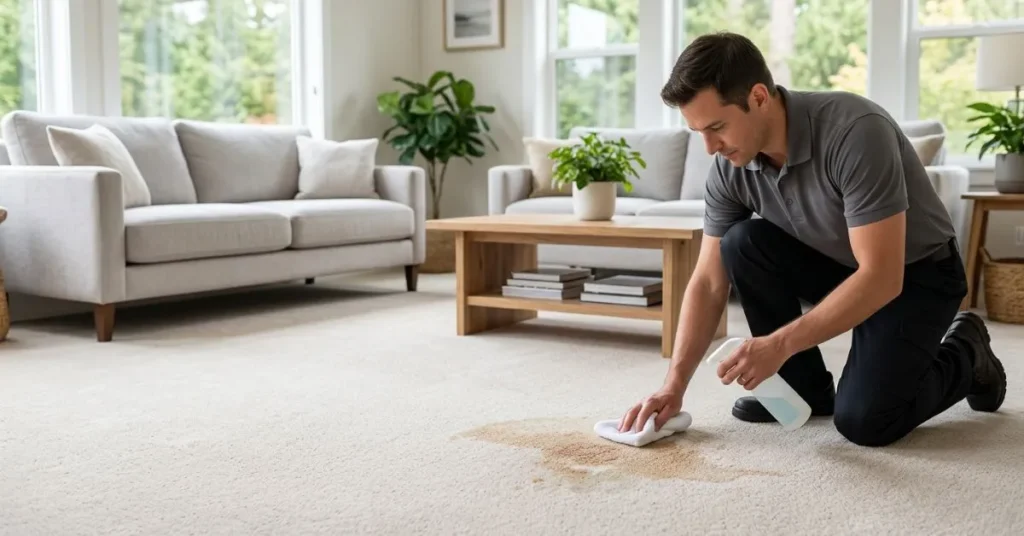
Why Do Carpet Stains Come Back After Cleaning?
Carpet stains usually return because of wicking, cleaning residue, excess moisture, or deep contamination. Identifying the cause helps you choose the right treatment and avoid making the problem worse.
How Wicking Causes Carpet Stains to Reappear
Carpet wicking happens when moisture carries hidden stain residue from deeper carpet layers back to the surface. This often occurs after spills soak into the carpet backing or padding.
As the carpet dries, moisture moves upward through the fibres. It can carry dissolved dirt and stain residue with it. The original mark then becomes visible again, even if the surface looked clean initially.
Wicking commonly affects spills involving coffee, juice, mud, and pet accidents. Blotting the surface alone may not remove contamination trapped underneath. Deep stains often need careful treatment and proper extraction.
How Soap and Detergent Residue Attracts Dirt
Leftover cleaning residue can make carpet stains return by attracting fresh dirt to the treated area. Some household cleaners leave a sticky film when they are not rinsed properly.
This film can collect dust, soil, and debris from everyday foot traffic. The cleaned area may then look darker than the surrounding carpet. You might notice the stain returning shortly after the carpet dries.
Using more detergent does not always improve cleaning results. Follow the product instructions and avoid applying excessive amounts. Proper rinsing and extraction help remove cleaning residue and loosened dirt.
How Overwetting and Incomplete Extraction Cause Recurring Stains
Excess moisture and incomplete extraction can leave dirt trapped inside carpet fibres and backing. These problems increase the chance of stains returning during the drying process.
Using too much water can push contamination deeper into the carpet. Poor extraction may also leave dirty moisture behind. As the carpet dries, some residue can move toward the surface.
Avoid soaking the carpet when treating a stain at home. Use only the amount of cleaning solution recommended for your carpet. Remove as much moisture as possible without damaging the fibres.
Can Carpet Browning or Permanent Discolouration Look Like a Returning Stain?
Carpet browning or permanent colour damage can resemble a stain that keeps returning. However, these problems may not involve dirt coming back to the surface.
Browning can occur when moisture affects certain carpet fibres, backing materials, or natural carpet components. Some cleaning products can also change the carpet’s colour. These marks may become more noticeable after drying.
Permanent discolouration is different from ordinary dirt or residue. Repeated cleaning may not remove it and could make the damage worse. Test suitable products carefully and seek professional advice when the cause remains unclear.
How to Identify Why Carpet Stains Keep Coming Back
Recurring carpet stains can result from wicking, cleaning residue, excess moisture, or deeper contamination. The stain’s appearance and timing can help you narrow down the cause.
How to Distinguish Wicking From Rapid Resoiling
Wicking usually makes the original stain reappear as moisture dries, while rapid resoiling attracts fresh dirt. Observing when the mark returns can help you tell these problems apart.
If the same stain reappears during drying, contamination may remain beneath the carpet surface. This often happens with old spills or deep pet accidents. The mark may closely match the original stain’s shape.
Rapid resoiling often develops after the carpet becomes dry and people walk over it. The area may look greasy, sticky, or darker than nearby fibres. Cleaning residue is one possible cause.
Avoid treating every returning mark the same way. Check the stain’s timing, location, and appearance before choosing a cleaning method. This can reduce unnecessary cleaning and protect your carpet.
Why Carpet Stains Reappear as the Carpet Dries
Carpet stains may reappear during drying because moisture moves hidden residue toward the surface. This is especially common when spills penetrate deep into carpet fibres or padding.
The carpet may look clean while wet because moisture changes how the fibres reflect light. As drying continues, the original mark can become visible again. Any remaining detergent may also leave a noticeable patch.
Allow the carpet to dry before judging the final result. However, do not assume every returning mark will disappear on its own. Persistent stains may need further treatment.
How to Stop Carpet Stains From Reappearing
Learning how to stop carpet stains from reappearing starts with proper stain treatment, thorough extraction, and complete drying. The right approach depends on the spill, carpet material, and depth of contamination.
Blot Stains Without Overwetting the Carpet
Blotting helps remove fresh spills without pushing more liquid into the carpet. Use a clean, absorbent cloth and press gently against the affected area.
Work from the outside of the stain toward the centre. This helps prevent the mark from spreading. Avoid rubbing, scrubbing, or pouring large amounts of water onto the carpet.
Replace the cloth as it absorbs liquid. Continue blotting until little moisture transfers to the cloth. For older stains, choose a suitable carpet cleaner and follow its instructions carefully.
Remove Cleaning Residue Through Proper Rinsing and Extraction
Proper rinsing and extraction help remove detergent, loosened dirt, and moisture that can cause recurring stains. This step matters when a carpet becomes sticky or dirty again after cleaning.
Use a cleaning solution designed for your carpet type. Follow the product directions and avoid mixing different cleaning products. If rinsing is recommended, use the correct method and remove excess moisture afterward.
Some people use diluted vinegar for certain household stains. However, vinegar is not suitable for every carpet fibre or backing material. Check the carpet manufacturer’s guidance before applying it, and test any product on a hidden area first.
For deep or stubborn stains, professional extraction may remove more contamination than surface treatment alone. Proper equipment and technique can also help control moisture during cleaning.
Use Suitable Enzymatic Cleaners for Pet Urine
Enzymatic cleaners can help break down organic compounds in pet urine that ordinary cleaners may leave behind. Choose a product labelled for pet urine and suitable for your carpet.
Follow the product instructions for application time and removal. Some treatments need enough contact time to work effectively. Removing the product too early may reduce its effectiveness.
Pet urine can soak through carpet fibres into the backing and padding. Surface treatment may remove the visible mark without addressing deeper contamination. If the odour or stain returns, further assessment may be necessary.
Dry the Carpet Thoroughly After Cleaning
Thorough drying reduces the chance of moisture-related stains returning after cleaning. It also helps prevent lingering damp smells and other moisture problems.
Improve airflow by opening suitable windows or using fans. Keep people and pets away from the damp area when possible. Follow any equipment or cleaning product instructions for drying.
Avoid covering wet carpet with rugs or furniture before it dries completely. Trapped moisture can slow drying and cause additional problems. If the carpet stays damp for an unusually long time, check for excess moisture or deeper contamination.
How to Treat Deep Carpet Stains That Keep Returning
Deep carpet stains may return when spills or contaminants remain trapped beneath the visible carpet fibres. These problems often need more than a quick surface clean.
Why Pet Urine and Large Spills Penetrate Carpet Padding
Pet urine and large spills can soak through carpet fibres and reach the backing or padding underneath. This makes the stain harder to remove with ordinary household cleaning.
The visible mark may disappear after surface treatment. However, hidden residue can remain beneath the carpet. Moisture may later carry that residue back toward the surface.
Pet urine can also leave persistent odours when contamination remains deep inside the carpet. Large spills may cause similar problems, especially when they are not treated quickly. Deep contamination requires careful assessment before choosing a treatment.
When Carpet Padding or the Subfloor Needs Further Treatment
Carpet padding or the subfloor may need further treatment when deep contamination keeps causing stains or odours. Surface cleaning cannot always reach these hidden areas.
A professional may need to assess how far the spill has travelled. Depending on the carpet system and contamination, treatment may involve deeper cleaning or access beneath the carpet. In severe cases, affected padding may need replacement.
Do not pull up carpet or apply large amounts of liquid without understanding the risks. Incorrect treatment can damage materials or spread moisture. Get professional advice when stains and odours continue despite suitable cleaning.
When to Consider Professional Carpet Stain Removal in Vancouver
Professional carpet stain removal in Vancouver may help when stains return despite careful home cleaning. A trained cleaner can assess the carpet, identify likely causes, and recommend suitable treatment.
How Professional Carpet Cleaning Addresses Wicking and Residue
Professional carpet cleaning can help address wicking and residue through suitable stain treatment and effective extraction. The exact method depends on the carpet material and type of contamination.
A professional can assess whether the stain sits near the surface or extends deeper. They can also check for signs of detergent residue, excess moisture, or possible colour damage. This helps guide the cleaning process.
For stubborn stains, professional carpet cleaning in Vancouver may help address embedded dirt and cleaning residue. The right treatment depends on the carpet material, stain type, and depth of contamination.
When Recurring Carpet Stains May Not Be Fully Removable
Some recurring carpet stains cannot be removed completely because they have permanently changed the carpet’s colour or fibres. More cleaning will not always restore the original appearance.
Bleach, certain chemicals, heat, and long-standing stains can cause lasting damage. Browning may also remain after the carpet has dried. These conditions need a different approach from ordinary dirt removal.
A professional can explain what treatment may achieve before cleaning begins. Be cautious of anyone who guarantees complete stain removal without assessing the carpet. Honest advice helps you make a more informed decision.
What to Expect From a Professional Carpet Stain Assessment in Vancouver
A professional stain assessment helps identify why a mark returns and which treatment may work best. The cleaner should consider the stain type, carpet material, previous cleaning methods, and depth of contamination.
They may ask when the stain first appeared and how it was treated. They can also check for residue, wicking, moisture, or signs of permanent discolouration. These details help determine the next steps.
For stubborn marks, ask about the proposed treatment and its limitations. Discuss any previous products you used and whether the stain involves pets. Clear communication helps set realistic expectations for your carpet.
Conclusion
Carpet stains can return because of wicking, cleaning residue, excess moisture, or deep contamination. Identifying the cause helps you choose the right treatment and avoid repeated cleaning attempts.
Some stains need professional attention, especially when pet urine reaches the carpet padding or cleaning residue remains trapped. Permanent colour changes may not respond to further cleaning, so realistic expectations matter.
Brighter Cleaning & Maintenance Services helps Vancouver customers explore suitable carpet cleaning options for stubborn stains. We can discuss your concerns and help you understand the next steps. Contact us today to discuss your carpet cleaning needs.