SAVE25
Up to 25% off for online bookings — from the 20th to the 5th of each month
Ends 5 Aug →

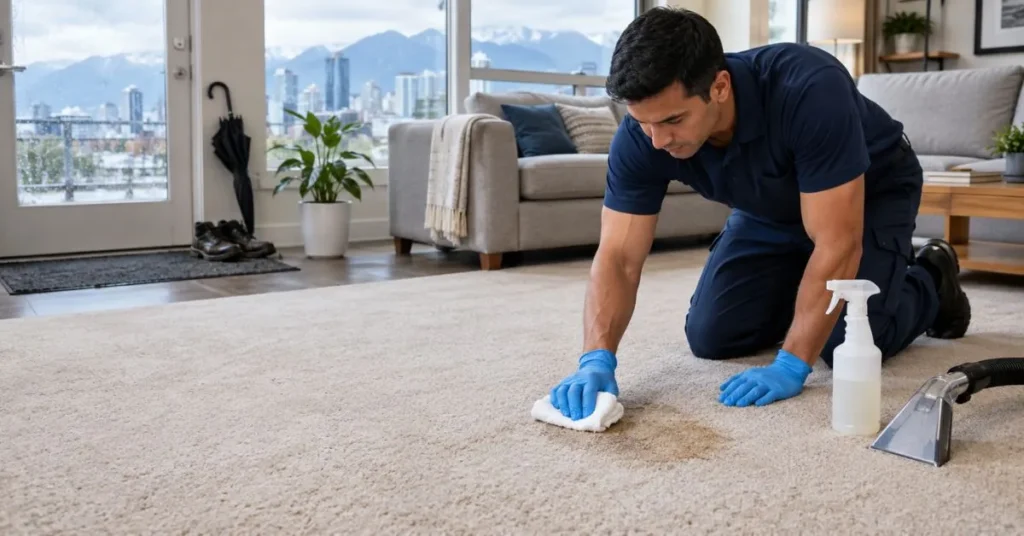
How to Remove Old and Set In Carpet Stains
Old carpet stains can often be removed with the right cleaning method and a little patience. Dried spills can leave dark marks that make your carpet look dirty. Some stains even return after you clean them.
This problem happens when spills sink deep into carpet fibers and dry. Our carpet cleaning experience shows that stain type, carpet material, and past cleaning attempts all affect results. The wrong product can also damage carpet colors.
You can solve this by following a safe cleaning process. This guide explains how to remove old carpet stains, treat common spills, and prevent stains from returning. You will also learn when to seek professional carpet cleaning in Vancouver, BC.
Why Old and Set In Carpet Stains Are Harder to Remove
Old carpet stains are harder to remove because dried residue can cling to carpet fibers. Dirt and spills may settle deep into the carpet over time. Regular vacuuming cannot remove all this trapped residue.
How Dried Residue Bonds to Carpet Fibers
Dried residue can cling tightly to carpet fibers and resist normal cleaning. Coffee, juice, and food spills leave behind materials that become harder to lift. Dust and foot traffic can make the marks look worse.
Start by identifying the stain. Then choose a cleaning method that suits the spill and carpet.
How Heat and Previous Cleaning Attempts Affect Stains
Heat and poor cleaning methods can make some stains harder to remove. Hot water may set certain protein stains, such as blood or dairy. Strong cleaners can also change carpet color.
Customers often struggle after using too much soap or scrubbing too hard. These actions may spread the stain or leave sticky residue. Avoid adding more products until you know what caused the mark.
Essential Precautions Before Removing Old Carpet Stains
Safe cleaning starts with testing products and protecting your carpet fibers. A simple mistake can cause fading, damage, or a larger stain. Take a few minutes to prepare before cleaning.
Test Cleaning Solutions for Colorfastness
Test every cleaning solution on a hidden carpet area first. Apply a small amount and follow the product instructions. Blot the test area with a clean white cloth.
Check for color transfer or fading. If the carpet color changes, stop using that product. Never assume a cleaner is safe for every carpet type.
Avoid Scrubbing and Overwetting the Carpet
Blot stains gently instead of scrubbing them. Hard rubbing can fray fibers and spread the stain. Use a clean white cloth and press down firmly.
Too much water creates another problem. Moisture can reach the carpet backing and padding. Use small amounts of liquid and remove as much moisture as possible.
Use the Correct Water Temperature for the Stain
Choose water temperature based on the type of stain. Cold water is often safer for blood, dairy, and other protein based stains. Heat can make some protein stains harder to remove.
For other stains, follow the carpet maker’s care instructions. Use warm water only when the material and cleaning product allow it. Avoid hot water unless the carpet care guidance supports it.
How to Remove Old and Set In Carpet Stains Step by Step
You can often improve old carpet stains by cleaning them in the correct order. Work slowly and avoid soaking the carpet. Repeat a suitable treatment only when the product instructions allow it.
Identify the Stain and Carpet Fiber Type
Identify the stain and carpet material before choosing a cleaner. Look for clues such as color, smell, and the stain’s location. Check the carpet label if available.
Wool and synthetic carpets may need different care. Unknown stains also need extra caution. When you cannot identify the material or spill, ask a carpet cleaning professional for advice.
Remove Loose Dirt and Dried Residue
Vacuum the stained area before applying any liquid cleaner. Remove loose dirt, dust, and dry particles first. For crusted residue, gently lift loose material with a spoon.
Do not scrape the carpet aggressively. Sharp tools can cut or pull out fibers. Keep the area dry during this first step.
Rehydrate the Stain When Appropriate
A small amount of water may help loosen some dried stains. First, confirm that water suits the stain and carpet material. Lightly dampen the area rather than soaking it.
Let the moisture work briefly. Then blot with a clean white cloth. Do not rehydrate stains that need a specialized treatment or could spread with water.
Apply a Suitable Carpet Cleaning Solution
Choose a cleaner that matches the stain and carpet care instructions. For some food spills, a mild carpet safe detergent may help. Follow the product’s mixing and use directions.
Apply only enough solution to treat the stained fibers. Avoid mixing household chemicals. Never combine bleach, ammonia, or other cleaners, as dangerous fumes may form.
Blot the Stain and Extract Residue
Blotting and extraction help lift loosened dirt from carpet fibers. Press a clean white towel against the treated area. Work from the outer edge toward the center.
Replace the towel as it picks up residue. A wet vacuum or carpet spot cleaner may remove more moisture. Follow the machine instructions and avoid excessive wetting.
Rinse and Remove Cleaning Product Residue
A light rinse can remove leftover cleaning product when the treatment requires it. Some residue attracts fresh dirt and leaves the carpet looking dull. Use a small amount of clean water.
Blot or extract the rinse water afterward. Check the product label before rinsing, as some treatments have specific instructions. Do not leave excess soap or moisture in the carpet.
Dry the Carpet Thoroughly
Drying the carpet fully helps reduce moisture problems and recurring stains. Press dry towels against the area to absorb extra water. Open windows when weather allows, or use a fan.
Keep people and pets away while the carpet dries. Check the backing and padding for lingering dampness when possible. If the area stays wet or develops a musty smell, seek professional advice.
How to Remove Different Types of Old Carpet Stains
Different stains need different treatments because their residues behave differently. A method that works on coffee may fail on grease or pet urine. Always test products first and follow carpet care instructions.
How to Remove Old Coffee, Tea, and Red Wine Stains
Old coffee, tea, and wine stains may respond to a suitable carpet stain cleaner. First, blot away loose residue and avoid rubbing the fibers. Apply a carpet safe product according to its label.
Work gently from the stain’s edge toward the center. Rinse only when the product directions recommend it. Old stains may leave some color behind, even after careful cleaning.
How to Remove Old Pet Urine Stains and Odors
Pet urine stains often need a cleaner designed for pet waste and odors. Urine can soak into carpet padding and leave odors below the surface. Surface cleaning alone may not reach all the residue.
An enzyme based pet stain cleaner may help break down organic residue. Follow the label and allow the product enough contact time. Avoid steam or heat unless the product and carpet instructions permit it.
If the smell returns, urine may remain beneath the carpet surface. A professional assessment can help identify the affected area and suitable treatment.
How to Remove Old Food and Grease Stains
Old food and grease stains need a treatment suited to their residue. Remove solid food carefully before applying a cleaner. For greasy marks, use a carpet safe product labeled for oil or grease.
Apply the cleaner sparingly and blot with a white cloth. Avoid rubbing grease deeper into the fibers. If the stain spreads or remains, stop and reassess the treatment.
How to Treat Old Ink and Dye Stains
Old ink and dye stains may require specialized carpet stain treatment. Some dyes can bond strongly to fibers or change the carpet’s color. Ordinary soap may not remove them.
Do not pour rubbing alcohol or strong solvents onto the carpet without checking compatibility. These products may damage backing, dyes, or nearby finishes. Contact a carpet cleaning professional when the stain’s source is unknown.
When to Use Enzymatic Carpet Cleaners
Enzymatic cleaners can help treat certain organic stains, including pet urine. They work on specific materials, so they are not suitable for every spill. Check the label to confirm the intended use.
Use the cleaner as directed and allow the recommended contact time. Do not mix it with other products. Test a hidden area first and keep pets away during treatment.
How Carpet Fiber Type Affects Stain Removal
Carpet fiber type affects which cleaners and methods are safe to use. Wool, nylon, polyester, and other materials respond differently to moisture and chemicals. Check the carpet care label before treating an old stain.
Cleaning Wool and Other Delicate Carpet Fibers
Wool and delicate carpets need careful treatment with compatible products. Harsh cleaners, strong rubbing, or excess moisture may damage natural fibers. Use products approved for the specific material.
Blot gently and avoid aggressive home remedies. If the carpet has special care instructions, follow them closely. Professional cleaning may be safer for valuable or delicate carpets.
Choosing Treatments for Synthetic Carpet Fibers
Synthetic carpets still need cleaners that match their fiber and dye. Nylon and polyester may tolerate some products differently. Never assume that a product safe for one carpet suits another.
Use the manufacturer’s care guidance and test first. Stop if the fibers change color or texture. Seek expert help when a stain resists safe treatment.
Which Old Carpet Stains Cannot Be Removed Completely?
Some carpet stains cannot be removed completely because the carpet itself has changed. Cleaning can lift residue, but it cannot always restore damaged dye or fibers. Knowing the difference helps set realistic expectations.
Permanent Carpet Dye Discoloration
Permanent dye changes may remain after the original stain is gone. Certain spills and cleaning products can alter carpet color. The affected area may look lighter or darker than its surroundings.
More cleaning will not always fix this problem. Repeated treatments may cause further damage. Stop cleaning if the carpet color changes during treatment.
Chemical Damage and Bleach Spots
Chemical damage can leave permanent light spots on carpet fibers. Bleach and some strong products remove or change dyes. Cleaning alone cannot replace lost color.
Avoid applying more chemicals to hide the mark. A professional can assess whether repair or color restoration is possible. Results depend on the carpet material and extent of damage.
Heat Damaged or Frayed Carpet Fibers
Heat damage and frayed fibers may not improve with stain cleaning. High heat can change some fibers or damage their texture. Aggressive scrubbing can also leave a rough or worn patch.
Cleaning may remove residue without restoring the original appearance. Check whether the problem is a stain or physical damage. Ask a professional to assess damaged carpet before trying more products.
Why Old Carpet Stains Reappear After Cleaning
Old stains may return when trapped residue moves back toward the carpet surface. This process is often called stain wicking. It can happen when moisture reaches deeper layers and carries residue upward during drying.
How Residue Wicking Causes Stains to Return
Stain wicking happens when moisture brings leftover residue back to the surface. A stain may look gone while the carpet remains damp. As it dries, the mark can appear again.
This problem often follows over-wetting or incomplete extraction. Blotting the surface alone may not remove deeper residue. Use controlled moisture and extract the cleaning liquid thoroughly.
How Proper Extraction and Drying Help Prevent Recurring Stains
Thorough extraction and complete drying can help reduce recurring stains. Remove as much moisture as possible after treatment. Use clean towels or a suitable extraction machine.
Allow enough airflow for the carpet to dry. Avoid walking on the area while it remains damp. If the stain returns repeatedly, deeper cleaning may be needed.
When to Seek Professional Carpet Stain Removal in Vancouver, BC
Professional carpet stain removal can help when safe home methods fail. Some stains reach the padding or need specialized products. A trained cleaner can assess the carpet and choose a suitable approach.
When DIY Stain Removal Fails
Seek professional help when a stain remains after careful, suitable treatment. Repeatedly adding cleaners can damage fibers or leave more residue. Stop if the stain spreads or the color changes.
This matters for delicate carpets and unknown stains. A professional can check the material and likely cause. Early assessment may prevent further damage from trial and error.
How Professional Stain Assessment and Targeted Treatment Work
Professional cleaners assess the stain, carpet fibers, and previous treatments before cleaning. They may use targeted products and suitable extraction methods. The process depends on the stain and carpet condition.
Tell the cleaner which products you have already used. This helps avoid incompatible treatments. Ask what results are realistic before work begins.
What Affects Professional Carpet Stain Removal Results
Stain age, residue type, carpet material, and past treatments affect cleaning results. Some stains respond well, while others leave lasting marks. No cleaning method can guarantee complete removal.
A clear estimate should explain the planned treatment and its limits. Local service availability also matters when arranging an appointment. Choose a Vancouver carpet cleaning provider that explains its process clearly.
Final Thoughts
Old carpet stains need the right treatment, careful blotting, and thorough drying. Identify the spill first and check your carpet care instructions. Avoid harsh scrubbing and untested chemical mixtures.
Brighter Cleaning & Maintenance Services helps customers care for carpets with practical cleaning solutions. Our team understands that stubborn stains can affect comfort and appearance. We focus on suitable treatments and honest expectations.
If old stains still bother you, we can help assess your carpet cleaning needs in Vancouver, BC. Contact Brighter Cleaning & Maintenance Services to discuss your stains and arrange a suitable service.