SAVE25
Up to 25% off for online bookings — from the 20th to the 5th of each month
Ends 5 Aug →

How to Protect Your Carpet During Vancouver’s Wet Season
Vancouver’s wet season can leave your carpets muddy, damp, and full of dirt. Protecting your carpet starts with stopping moisture at the door.
Rain brings mud, grit, and road salt into homes across Vancouver. These materials can settle deep inside carpet fibres and cause lasting wear. Damp carpets can also develop unpleasant smells when they dry too slowly.
The good news? Small changes can make a big difference. Learn how to protect your carpet during Vancouver’s wet season, handle wet spots, and keep your home fresh. You will also learn when professional carpet cleaning services in Vancouver can help.
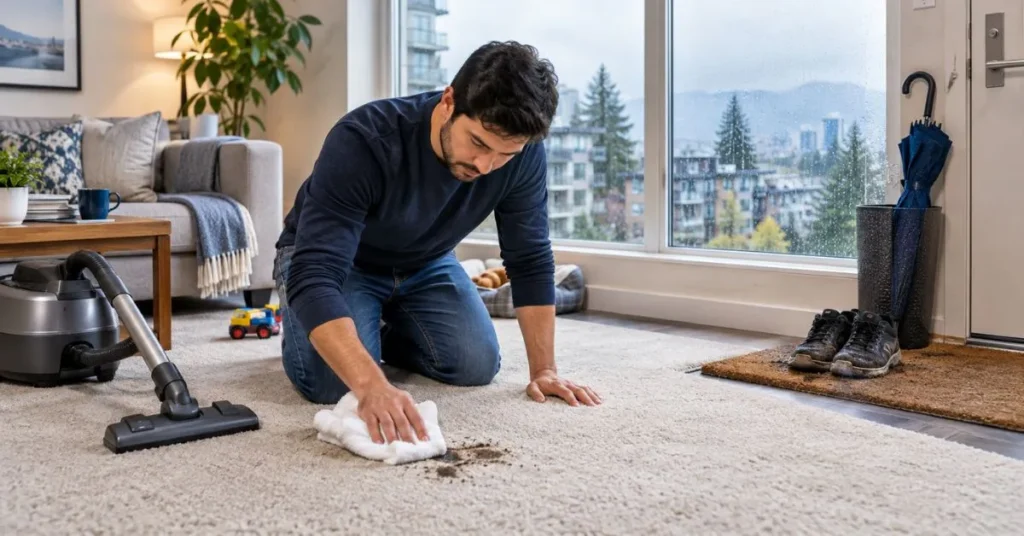
How Vancouver’s Wet Season Affects Carpets
Vancouver’s wet weather brings moisture, mud, and outdoor dirt into homes. These materials collect in carpet fibres and make regular care more important.
How Rainwater, Mud, and Grit Damage Carpet Fibres
Rainwater carries mud and grit that can wear down carpet fibres. This problem happens when people walk inside with wet shoes. Grit settles between the fibres and acts like tiny pieces of sand.
Over time, this dirt can make carpets look dull and worn. Regular vacuuming helps remove dry soil before it causes more damage. Entry mats also help catch dirt before it reaches your carpet.
How Road Salt and Winter Grime Build Up in Carpet
Road salt and winter grime can leave marks and residue on carpet. Shoes carry these materials inside after walking on wet streets and sidewalks.
The residue may leave pale marks on darker carpets. Prompt, careful cleaning helps reduce buildup and staining. Always check your carpet care instructions before using a cleaning product.
How to Protect Carpet from Rain, Mud, and Dirt
The best way to protect carpet is to stop outdoor dirt at your entrance. A few simple habits can reduce cleaning needs during Vancouver’s rainy season.
Use Indoor and Outdoor Mats to Trap Moisture
Place a scraper mat outside and an absorbent mat inside each main entrance. The outdoor mat catches grit, while the indoor mat absorbs water. Choose mats that stay flat and have non-slip backing.
Clean the mats often. A dirty mat can spread mud instead of trapping it. Let wet mats dry fully before using them again.
Remove Wet Shoes and Protect High Traffic Areas
Ask family members and guests to remove wet shoes at the door. Keep a shoe tray nearby to collect water and mud. This simple habit helps keep dirty footprints away from your carpet.
Use washable runners in hallways and other busy areas. Choose runners that stay secure underfoot. Clean them regularly so they do not collect too much dirt.
How to Remove Road Salt and Mud from Carpet Safely
Remove loose dirt first, then treat salt marks with a suitable carpet cleaner. Let mud dry when practical before gently removing loose soil. This helps prevent wet mud from spreading deeper into the fibres.
For salt residue, follow your carpet maker’s care instructions. Test any cleaning product in a hidden area first. Blot gently instead of scrubbing, which can damage fibres or spread the stain.
How Often to Vacuum Carpet During Vancouver’s Rainy Season
Vacuum busy carpet areas several times each week during wet weather. Entryways and hallways often collect the most dirt. Homes with pets or children may need daily vacuuming in these areas.
Move slowly so your vacuum can pick up more soil. Use a suitable setting for your carpet type. Regular vacuuming helps prevent dirt from building up deep inside the fibres.
Manage Wet Pet Paws and Indoor Traffic
Wipe your pet’s paws before they walk across carpeted rooms. Keep a clean towel near the entrance for quick use. This helps remove water, mud, and loose grit.
Place washable mats near pet doors and favourite resting spots. Clean muddy paw marks promptly. Blot wet areas instead of rubbing them, and let the carpet dry fully.
How to Control Moisture and Prevent Carpet Odors
Good airflow and moisture control help carpets dry and reduce musty smells. Vancouver’s damp weather makes these steps especially useful when rain continues for several days.
Reduce Excess Indoor Humidity and Improve Airflow
Keep indoor humidity at a comfortable level and improve airflow around damp areas. High humidity can slow evaporation and leave carpets wet longer.
Use suitable ventilation when outdoor conditions allow. Keep furniture slightly away from damp carpet when practical. Avoid covering wet areas with rugs or heavy furniture until they dry completely.
Use Fans and Dehumidifiers to Help Carpet Dry
Fans and dehumidifiers can help remove moisture from damp indoor spaces. Place a fan where it can move air across the affected carpet. Use a dehumidifier when indoor humidity remains high.
Keep airflow steady while the carpet dries. Follow the equipment instructions and avoid unsafe electrical setups near standing water. Do not assume the carpet is dry just because its surface feels dry.
Prevent Musty Smells from Persistent Carpet Dampness
Prevent musty smells by finding and fixing the source of moisture. Damp carpet may smell unpleasant when water remains trapped in its backing or underpad.
Check for plumbing leaks, wet shoes, and spills that went unnoticed. Dry small wet spots promptly. Persistent dampness or a lasting musty smell needs further investigation. Avoid covering the smell with fragrances or powders.
What to Do When Your Carpet Gets Wet
Act quickly when carpet gets wet to limit damage and reduce drying time. The right response depends on how much water reached the carpet and where it came from.
Blot Spills and Remove Excess Water Quickly
Blot fresh spills with a clean, white absorbent cloth. Press gently to lift moisture without spreading it. Replace the cloth as it becomes wet.
Do not scrub the carpet. Scrubbing can push dirt deeper into the fibres and damage the surface. Remove as much moisture as possible before drying the area with airflow.
How to Dry Wet Carpet and Underpad
Dry wet carpet promptly and check whether moisture has reached the underpad. Use towels for small spills and a suitable wet vacuum when needed. Keep air moving across the affected area.
The backing and underpad can hold water after the surface feels dry. Large or deeply soaked areas may need professional water extraction and drying. Avoid pulling up fitted carpet unless you know how to handle it safely.
Signs of Hidden Moisture Under Carpet
Persistent dampness, musty smells, and recurring wet spots may signal hidden moisture. The carpet surface does not always show how wet the underpad remains.
Check areas near exterior doors, windows, plumbing, and previous leaks. Look for damp edges or changes in the carpet’s feel. Arrange a professional assessment if moisture persists or you suspect hidden damage.
When Wet Carpet Needs Water Damage Restoration
Waterlogged carpet may need water damage restoration instead of routine carpet cleaning. This is especially true after flooding, major leaks, or water that reaches the underpad.
A restoration professional can assess the affected materials and drying needs. Do not rely on ordinary carpet cleaning to fix serious water damage. Quick action can help limit further damage to floors and nearby materials.
What to Do About Floodwater or Sewage Contamination
Keep away from carpet contaminated by sewage or potentially unsafe floodwater. Contaminated water can carry harmful germs and other pollutants. Do not try to clean heavily affected areas with household products alone.
Contact qualified water damage professionals for safe assessment and cleanup. Follow local public health guidance where relevant. Protect people and pets until the affected area is safe.
When to Seek Professional Mold Assessment
Seek professional advice if you see suspected mold or notice a persistent musty smell. Hidden moisture can allow mold to grow beneath carpet or inside nearby materials.
Routine carpet cleaning does not replace mold assessment or remediation. Avoid disturbing suspected mold, especially across large areas. A qualified professional can help determine the next steps.
How to Maintain Carpet Throughout Vancouver’s Wet Season
A simple maintenance routine helps keep carpet cleaner throughout Vancouver’s wet season. Regular care removes soil early and helps you spot moisture problems before they worsen.
Create a Regular Vacuuming and Carpet Care Routine
Vacuum high traffic areas often and check entrances for moisture every day. Shake out or clean mats before dirt spreads indoors. Treat small spills as soon as they happen.
Check for damp patches after heavy rain. Wash reusable runners when they become dirty. Adjust your routine for pets, children, and the amount of foot traffic.
When to Schedule Professional Carpet Cleaning
Schedule professional carpet cleaning when soil, stains, or odors remain despite regular care. Professional equipment can remove embedded dirt that household vacuuming leaves behind.
Cleaning frequency depends on carpet use, household needs, and manufacturer guidance. Busy homes may need more frequent service than lightly used rooms. Choose a cleaning schedule that matches your carpet’s actual condition.
How to Prepare Your Carpet for Professional Cleaning
Prepare your carpet by clearing small items and pointing out stains before cleaning begins. Move light furniture when safe and practical. Keep pets and children away from the work area.
Tell your cleaner about previous treatments and delicate carpet materials. Share any concerns about damp spots or lingering odors. This helps the technician choose an appropriate cleaning method.
How Long Does Professional Carpet Cleaning Take to Dry?
Carpet drying time depends on the cleaning method, fibre type, airflow, and indoor humidity. Some carpets dry within hours, while others take longer. Vancouver’s damp weather can slow drying when ventilation is limited.
Follow your technician’s drying instructions. Use suitable airflow and avoid replacing rugs or heavy furniture too soon. Wait until the carpet and backing are fully dry before covering the area.
How to Avoid Overwetting Carpet with DIY Cleaning Machines
Avoid using too much water when cleaning carpet with a rental machine. Excess moisture can soak the backing and underpad. This may increase drying time and lead to unpleasant odors.
Follow the machine instructions and make the recommended extraction passes. Avoid repeated wet cleaning when the carpet remains damp. Consider professional cleaning if your machine leaves the carpet heavily wet.
Protect Your Carpet with the Right Seasonal Care
You can protect your carpet by controlling dirt at the door and managing moisture quickly. Use good mats, remove wet shoes, and vacuum high traffic areas often. These habits help keep carpet cleaner during Vancouver’s rainy season.
Brighter Cleaning & Maintenance Services can help when routine care no longer removes embedded dirt or stubborn stains. Our professional carpet cleaning services support cleaner carpets and a fresher indoor space. We can help you choose suitable care based on your carpet’s needs.
Do not wait for dirt and dampness to build up. Contact Brighter Cleaning & Maintenance Services to discuss your carpet cleaning needs in Vancouver, BC. We are ready to help you plan the right next step for your home. Find Brighter Cleaning & Maintenance Services on Google Maps to view our business listing and location information.