SAVE25
Up to 25% off for online bookings — from the 20th to the 5th of each month
Ends 5 Aug →

What Should You Avoid Doing After Carpet Cleaning?
After professional carpet cleaning in Vancouver BC, you should avoid walking, moving furniture, or using harsh cleaners until your carpet dries. Freshly cleaned carpet needs gentle care during this time. Many homeowners worry about damaging their carpet after professional cleaning.
This problem happens when damp carpet gets heavy use too soon. Shoes, furniture, pets, and dirt can affect fresh cleaning results. You can prevent these problems with simple aftercare steps.
This guide explains what to avoid after carpet cleaning. You will also learn about drying times and furniture placement. These tips can help protect your carpet in Vancouver homes and condos.
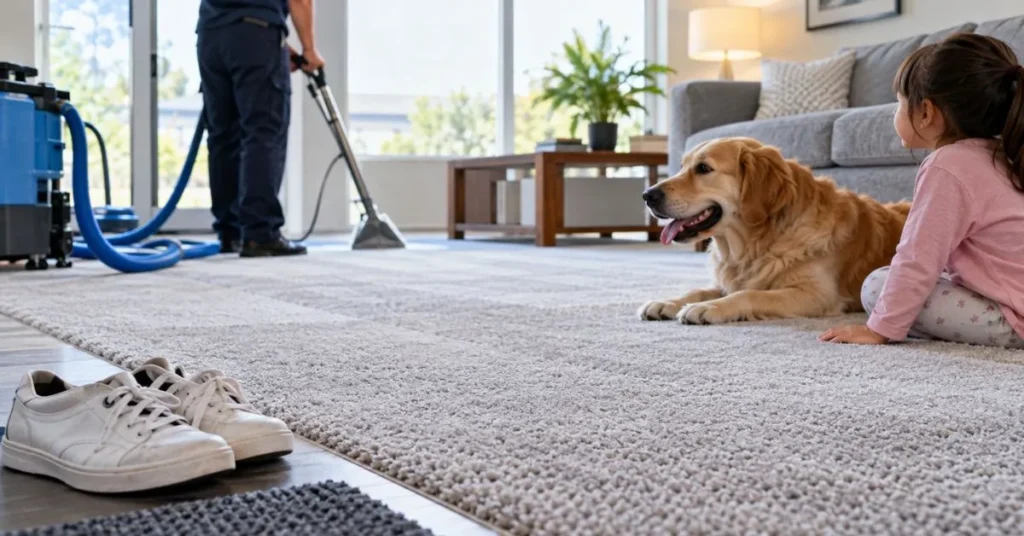
What to Avoid Immediately After Carpet Cleaning
You should avoid heavy carpet use until the carpet dries completely. This protects your cleaning results and carpet fibres. You should also follow your cleaner’s specific aftercare advice.
Avoid Walking on the Carpet With Shoes or Bare Feet
You should avoid shoes and bare feet until the carpet dries. Shoes can bring dirt back onto freshly cleaned fibres. Bare feet can also transfer natural oils onto damp carpet.
Clean socks or indoor slippers are better choices during this time. This simple step helps prevent quick re-soiling.
Keep Pets and Children Off Damp Carpet
You should keep pets and children away from damp carpet.Pets can track dirt, shed hair, or cause accidents.Children can also slip on wet carpet surfaces.
Wait until the carpet feels completely dry before normal use.This protects both the carpet and household members.
Avoid Placing Furniture Back Too Soon
You should wait before returning heavy furniture to damp carpet. Furniture can leave deep marks while carpet fibres remain soft. Wood and metal furniture can also cause unwanted stains.
Follow the cleaner’s recommended waiting time. This timing depends on the cleaning method and carpet type.
Keep Protective Tabs Under Furniture Legs Until the Carpet Dries
You should keep protective tabs under furniture legs during drying.These tabs help separate furniture from damp carpet. Leave them in place until the carpet dries completely.
This protection can reduce furniture marks and colour transfer. Metal legs may also leave stains when moisture remains underneath.
Avoid Using Harsh DIY Carpet Cleaners
You should avoid harsh cleaners immediately after professional carpet cleaning. Strong products can react with cleaning residue. They may also damage fibres or affect carpet colour.
Avoid adding unknown products without professional advice. Contact your cleaner before treating difficult spots.
Avoid Scrubbing Fresh Spills
You should blot fresh spills instead of scrubbing the carpet. Scrubbing can push liquid deeper into the fibres. It can also disturb freshly cleaned carpet.
Gently blot spills with a clean cloth. This helps absorb liquid without spreading the stain.
Avoid Vacuuming Too Soon
You should avoid vacuuming while the carpet remains damp. Damp fibres need time to settle and dry. Follow your cleaner’s recommended vacuuming time.
The correct timing can vary by cleaning method. Your cleaner can provide specific instructions for your carpet.
Avoid Covering Damp Carpet
You should avoid covering damp carpet until it dries completely. Coverings can reduce airflow across carpet fibres. This can make drying take longer.
Keep damp carpet uncovered whenever possible. Good airflow supports faster and more even drying.
How Long Should You Wait Before Walking on Carpet After Cleaning?
You should wait until the carpet feels completely dry before normal walking. Drying time varies between carpets and cleaning methods. Follow the drying advice from your carpet cleaner.
How Long Does Carpet Usually Take to Dry?
Most professionally cleaned carpets need several hours to dry fully. Some carpets may need longer because of their thickness. Padding can also hold moisture below the carpet surface.
Avoid relying on one fixed drying time. Your cleaner can provide a more accurate estimate after service.
How Cleaning Method Affects Drying Time
The cleaning method can strongly affect how quickly carpet dries. Hot water extraction can leave more moisture behind. Low moisture methods often require less drying time.
Ask which method suits your carpet best. The right choice depends on fibres, soil, and carpet condition.
How Carpet Type, Humidity, and Airflow Affect Drying Time
Carpet type, humidity, and airflow can change drying time. Thick carpet can hold more moisture than thin carpet. High indoor humidity can also slow evaporation.
Vancouver’s damp weather may affect drying in some homes. Improve airflow when safe and practical.
When Can You Put Furniture Back After Carpet Cleaning?
You should return furniture after the carpet becomes sufficiently dry. This reduces pressure marks and moisture-related furniture stains. Follow your cleaner’s specific instructions.
How to Know When the Carpet Is Dry Enough for Furniture
The carpet should feel dry before you return heavy furniture. Gently touch the carpet to check for moisture. Check areas where furniture normally sits.
Wait longer when noticeable dampness remains. This simple step can prevent unnecessary carpet damage.
How to Prevent Furniture Marks and Stains
You can prevent furniture marks by protecting furniture legs. Protective tabs reduce direct contact with damp carpet. Avoid dragging furniture across freshly cleaned carpet.
Dragging can disturb fibres and create visible marks. Careful furniture placement protects the carpet’s fresh appearance.
Why Is My Carpet Still Wet After Cleaning?
Your carpet may stay wet because of moisture, airflow, or carpet type. This does not always mean something went wrong. First, check the expected drying timeframe.
When Extended Drying Time Can Be Normal
Longer drying can happen when airflow is poor or humidity is high. Thick carpet and padding can also hold moisture longer. Allow extra time when conditions slow evaporation.
Vancouver weather can create damp indoor conditions. Improve airflow when possible.
When Excess Moisture May Indicate a Problem
Persistent moisture may need professional attention after the expected drying period. Contact your carpet cleaner for guidance. Avoid adding more cleaning products during this time.
Extra chemicals can create residue and complicate the problem. Your cleaner can assess the carpet and recommend the next step.
How Can You Help Carpet Dry Faster?
You can help carpet dry faster by improving airflow and controlling humidity. These steps support evaporation without stressing carpet fibres. Always follow your cleaner’s drying instructions.
Improve Airflow Around the Carpet
You can improve airflow by using suitable fans and ventilation. Moving air helps moisture leave carpet fibres more quickly. Keep airflow moving across the cleaned area.
Avoid placing objects directly over damp carpet. Open space allows better air movement around the fibres.
Control Indoor Humidity and Temperature
You can support drying by keeping indoor humidity under control. Lower indoor moisture helps water leave the carpet. Suitable ventilation or dehumidifying equipment can help.
Avoid excessive heat around damp carpet. Steady airflow usually provides safer drying conditions.
Avoid Overheating Damp Carpet
You should avoid using excessive heat to force carpet drying. Strong heat may affect some carpet materials and backing. Use normal indoor conditions with steady airflow.
What Should You Do About Spills After Carpet Cleaning?
You should blot spills gently instead of aggressively scrubbing them. This protects freshly cleaned fibres from unnecessary wear. Avoid using random cleaning chemicals.
Blot Fresh Spills Instead of Scrubbing
You should gently blot fresh spills with a clean absorbent cloth. This removes liquid without spreading it across nearby fibres. Avoid rubbing the affected area.
Professional help may suit difficult stains or large spills. Contact your cleaner when you are unsure.
Avoid Applying Unapproved Cleaning Products
You should avoid unapproved cleaning products after professional carpet cleaning. This reduces risks from residue, colour changes, and fibre damage. Ask your cleaner before using strong spot treatments.
Never mix different cleaning products. Some products can react and create unwanted results.
Carpet Cleaning Aftercare for Vancouver Homes and Condos
Vancouver customers should consider humidity, airflow, and property type after cleaning. Condos may have limited ventilation compared with larger homes. Plan enough drying time before normal room use.
Managing Drying Time During Vancouver’s Humid Conditions
Vancouver’s damp weather can sometimes make carpet drying take longer. Indoor humidity and ventilation can affect evaporation. Use safe airflow to support drying.
Condo residents should also consider limited window access. Fans and suitable ventilation can help in these situations.
Follow the Carpet Cleaning Technician’s Aftercare Instructions
You should follow your carpet cleaner’s instructions after every cleaning. This advice reflects your carpet type and cleaning method. Ask questions before changing the recommended routine.
This approach helps protect your carpet investment and cleaning results. Contact the cleaner if unusual moisture or staining appears.
Conclusion
You should avoid heavy traffic, furniture, harsh cleaners, and coverings while carpet remains damp. Keep pets and children away until the carpet dries. Blot spills gently and avoid aggressive scrubbing.
Proper drying remains the most important part of carpet aftercare. Improve airflow and control indoor humidity when possible. These steps can help freshly cleaned carpets dry safely.
Brighter Cleaning & Maintenance Services helps Vancouver customers care for freshly cleaned carpets. Our team can recommend suitable cleaning methods and aftercare steps. Contact us today, and we can help protect your carpet from avoidable damage.